
Promote Understanding

JAEA President
March 1960:
Completed Master's Course in Graduate School of Engineering, Kyoto University
March 1958:Graduated from School of Applied Physics, Faculty of Engineering, Kyoto University
Professional history:June 2013:
President, JAEA
November 2012:Chairman, Japan Nuclear Safety Institute
April 2000:Chairman, Nuclear Safety Commission
November 1998:President, Japan Atomic Energy Research Institute (JAERI) (After experience as Vice President)
February 1993:Executive Director, JAERI
September 1989:Deputy Director General, Tokai Research Establishment, JAERI
August 1986:Director, Office of Planning, JAERI
April 1985:Director, Department of Reactor Engineering, Tokai Research Establishment, JAERI
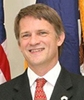
Assistant Secretary of State for International Security and Nonproliferation, United States
Mr. Thomas Countryman, a career member of the Senior Foreign Service, rank of Minister-Counselor, has been Assistant Secretary for International Security and Nonproliferation since September 2011. The ISN Bureau leads the U.S. effort to prevent the spread of nuclear, chemical, and biological weapons, their related materials, and their delivery systems.
Mr. Countryman began his State Department career in 1982, serving as a consular and political officer in Belgrade, Yugoslavia from 1983 to 1985. From 1985 to 1988, he worked in the Department's Office of Eastern European and Yugoslav Affairs.
From 1988 to 1990, Mr. Countryman studied Arabic language and culture in the U.S. and Tunisia. During Operations Desert Shield and Desert Storm, he served as the Political-Military Officer at the American Embassy in Cairo, Egypt. From 1991 to 1993, he was the senior officer for reporting on political, security, and religious affairs within Egypt.
In 1993 and 1994, Mr. Countryman worked in the State Department's Office of Counter-Terrorism. From 1994-1997, he was responsible for advising Ambassador Albright on Middle East affairs at the U.S. Mission to the United Nations, and served as liaison with the UN Special Commission investigating Iraq's weapons programs. In this position, he dealt not only with Iraq, but also with Libya, Sudan and Arab-Israeli issues.
From 1997 to 1998, Mr. Countryman served as Director for Near East and South Asian Affairs at the National Security Council, with responsibility for the region stretching from Morocco to Syria. As part of his position at the NSC, he served as the White House representative on Ambassador Dennis Ross' peace process team. In 1998-1999, he participated in the Senior Seminar, the federal government's most advanced professional development program for foreign affairs and national security officials.
From 1999 to 2001, Mr. Countryman was Director of the Office of South Central European Affairs (EUR/SCE) in the Department of State, where he focused on working with the democratic opposition in Serbia. From 2001 to 2005, he was the Minister-Counselor for Political Affairs at the American Embassy in Rome, Italy.
After a short assignment as Director of the Office of United Nations Political Affairs in the Department, he served as Deputy Chief of Mission at the US Embassy in Athens, Greece from 2005 to 2008. For a five-month period in 2007, he served as the Chargé d'Affaires of the Embassy. In 2008-2009, he was the Foreign Policy Advisor to General James Conway, the Commandant of the US Marine Corps.
He served as the Principal Deputy Assistant Secretary for Political-Military Affairs in 2009-2010, and as Deputy Assistant Secretary for European Affairs (with responsibility for Balkan affairs) in 2010-2011.
The Department of State gave him the Superior Honor Award for each of his assignments at USUN, EUR/SCE, Rome, and Athens. He was awarded senior performance pay in 2006 and 2007, and received the Presidential Meritorious Service Citation for 2007.
Mr. Countryman graduated from Washington University in St. Louis (summa cum laude) with a degree in economics and political science, and studied at the Kennedy School of Government at Harvard University. His foreign languages are Serbo-Croatian, Arabic, Italian, Greek, and German. He is a native of Tacoma, Washington. He is married and has two sons.
Director of Strategy and International Affairs of the Alternative Energies and Atomic Energy Commission (CEA) and Governor for France to the IAEA
Degree in history, geography aggregation, Postgraduate Diploma (cities and societies)
Graduate of the Ecole Supérieure de Commerce de Lyon;
Alumnus of the École nationale d'administration, promotion "Valmy", 1998.
At the École nationale d'administration, 1996-1998;
Appointed as Secretary of Foreign Affairs, 1 April 1998;
Special Adviser to the Director of the abroad French community dept, 1998-2001;
Special Adviser to the Director of Political affairs, 2001-2003;
First Secretary at the Permanent Representation of France to the United Nations in New York, 2003-2007, in charge of the arms control and non-proliferation portfolio;
First Counselor in Athens, 2007-2009;
First Counselor in Kabul, 2010-2011;
Deputy Director of Strategic, Security and Disarmament Affairs, January 2012-August 2013.
Languages: Fluent English, Italian, German
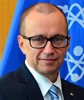
Deputy Director General and Head of the Department of Safeguards, International Atomic Energy Agency (IAEA)
Mr. Varjoranta assumed the post of Deputy Director General and Head of the Department of Safeguards on 1 October 2013. Prior to this, he was the Director General of the Radiation and Nuclear Safety Authority, STUK, in Finland. Between 2010-2012 Mr. Varjoranta served as a Director in the Nuclear Energy Department of the IAEA having previously worked as Division Manager in the International Science and Technology Centre in Moscow. Mr. Varjoranta has served as President of ESARDA, President of the European Nuclear Regulators Group (ENSREG) and as a member of SAGSI for seven years. He is a physicist by education (MSc and PhL) from Helsinki University.

Ambassador, Adjunct Senior Fellow, The Japan Institute of International Affairs / Former Vice Chairman, Atomic Energy Commission of Japan
The University of Tokyo, Faculty of Law
Career Experience:1958
Joined Ministry of Foreign Affairs
1958-60Studies at DePauw University and Princeton University (USA)
1967-71Second and First Secretary, Embassy of Japan in the United Kingdom (UK)
1973-75Director, South-West Asia Division, Asian Affairs Bureau, Ministry of Foreign Affairs
1975-77Director, Korea Division, Asian Affairs Bureau, Ministry of Foreign Affairs
1977-79Counselor, Embassy of Japan in the UK (Research Associate, International Institute for Strategic Studies)
1979-81Minister, Embassy of Japan in Mexico
1981-85Deputy Director-General, United Nations Bureau, Ministry of Foreign Affairs
1985-87Consul-General of Japan in Honolulu, Hawaii(USA)
1987-89Director-General for Scientific and Technological Affairs, Ministry of Foreign Affairs
1989.7-1992.3Governor, Board of Governors, International Atomic Energy Agency (1989.10-1990.10 Chairman, Board of Governors)
1989.11-1992.3Ambassador Extraordinary and Plenipotentiary, Permanent Mission of Japan to the International Organizations in Vienna(Austria)
1992.5-1992.12Ambassador Extraordinary and Plenipotentiary, in charge of Assistance to former Soviet Union
1993.3-1993.8Ambassador Extraordinary and Plenipotentiary, in charge of Japan-North Korea Normalization Talks and Asia-Pacific Economic Cooperation(APEC)
1994.12Ambassador in charge of Korean Peninsula Energy Development Organization(KEDO)
1996.1Ambassador Extraordinary and Plenipotentiary, Embassy of Japan in New Zealand
1998.1Commissioner, Atomic Energy Commission
2001.1Vice-chairman, Atomic Energy Commission
2004.1-2005.3Special Assistant to the Minister for Foreign Affairs
2006-Adjunct Senior Fellow, The Japan Institute of International Affairs(JIIA)
Head of the IAEA Tokyo Regional Office
Mr. Davis Hurt is currently Head of the Tokyo Regional Office of the International Atomic Energy Agency. The IAEA Tokyo Regional Office coordinates safeguard inspections and other safeguards activities in Japan, and serves as liaison between the IAEA and the Japanese government’s safeguards authorities.
Prior to his assignment to Tokyo in July 2011, Mr. Hurt was for five years the head of a section of inspectors responsible for safeguards implementation in 16 European countries. In earlier duties with IAEA, going back to 1997, he was section head for safeguards policy development.
Prior to joining the IAEA, Mr. Hurt was Assistant Technical Director of the U.S. Defense Nuclear Facilities Safety Board in Washington, DC. He was trained as a nuclear engineer, and has worked on nuclear safety and safeguards issues since 1977 in Washington, Vienna and Tokyo.
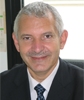
Nuclear Counsellor at the Embassy of France in Japan
Mr. Christophe Xerri has been assigned as Nuclear Counsellor at the Embassy of France in Japan since December 1st, 2011.
After graduating from Ecole Centrale de Lyon (Engineering - 1984) and Salford University (UK – Master of Science - 1984) and Institut Supérieur des Affaires (MBA - 1988), Mr. Christophe Xerri started his career in a Japanese bank in Tokyo.
He then joined AREVA Group in 1991, where he got involved in the promotion of nuclear fuel recycling, in the implementation of the first return of reprocessing residues to Japan, then in investments in uranium mining and in innovation and technological developments (including joint programs with CEA).
In 2000, he moved to the field of International Relations and Non-Proliferation, acted as expert to the IAEA and chaired a European expert working group on Safeguards implementation. This position included interaction with the International Directorate of CEA and with the Ministry of Foreign Affairs.
From 2003 to 2007, he was appointed personal assistant to the CEO of AREVA for international affairs.
He moved to Tokyo in 2007 to join AREVA Japan as Managing Director - Marketing and Industrial Strategy. In this position, he was involved in developing relationship with MHI and in the creation of the MNF Joint-Venture. He was then seconded by AREVA to the position of Director and Senior Executive Vice President of Mitsubishi Nuclear Fuel (MNF), a joint-venture created in Japan in 2009 between AREVA, and Mitsubishi Heavy Industries (MHI) in the field of nuclear fuel design and fabrication.

Senior Fellow, Brookings Institution
Mr. Robert Einhorn is a senior fellow with the Arms Control and Non-Proliferation Initiative and the Center for 21st Century Security and Intelligence, both housed within the Foreign Policy program at Brookings. Mr. Einhorn focuses on arms control (U.S.-Russia and multilateral), nonproliferation and regional security issues (including Iran, the greater Middle East, South Asia, and Northeast Asia), and U.S. nuclear weapons policies and programs.
Before coming to Brookings in May 2013, Mr. Einhorn served as the State Department special advisor for nonproliferation and arms control, a position created by Secretary of State Hillary Clinton in 2009. In that capacity, he played a leading role in the formulation and execution of U.S. policy toward Iran's nuclear program, both with respect to sanctions and negotiations between Iran and the P5+1 countries. He also helped shape the Obama administration's overall approach to nonproliferation, supported nonproliferation goals through diplomatic contacts with China, Russia and key non-aligned countries and addressed nuclear security and strategic stability challenges in South Asia. He played a key role in the development of the 2010 Nuclear Posture Review and served as U.S. delegation head in negotiations with South Korea on a successor civil nuclear agreement.
Between 2001 and 2009, Mr. Einhorn was a senior advisor at the Center for Strategic and International Studies, where he directed the CSIS Proliferation Prevention Program. Before coming to CSIS, he was assistant secretary of state for nonproliferation (1999-2001), deputy assistant secretary of state for political-military affairs (1992-1999), and a member of the State Department policy planning staff (1986-1992). Between 1972 and 1986, he held various positions at the U.S. Arms Control and Disarmament Agency, including ACDA's representative to the strategic arms reduction talks with the Soviet Union. In 1984, he was an international affairs fellow at the Council on Foreign Relations.
Mr. Einhorn has written extensively in the area of arms control and nonproliferation. He authored Negotiating from Strength: Leverage in U.S.-Soviet Arms Control Negotiations (1984), co-edited Protecting against the Spread of Nuclear, Biological, and Chemical Weapons: An Action Agenda for the Global Partnership and The Nuclear Tipping Point: Why States Reconsider their Nuclear Choices, and published numerous articles in such journals as Survival, The National Interest, Foreign Policy, Arms Control Today, The Washington Quarterly, The Nonproliferation Review, and Yaderny Kontrol.
Mr. Einhorn holds a B.A. in government from Cornell University and a M.A. in public affairs and international relations from the Woodrow Wilson School at Princeton University.
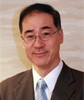
The Kyoto University Research Reactor Institute (KURRI)
Professor of Research Reactor Institute, Kyoto University, specialized in nuclear fuel cycle engineering and related actinide chemistry. He was born in 1953, in Kyoto, Japan. In 1981, he received Ph.D. degree from Tohoku University in his radiochemical research of actinide elements. In April 1981, He entered Power Reactor and Nuclear Fuel Development Corporation (which is now, Japan Atomic Energy Agency), and joined the reprocessing technology development at Tokai Reprocessing Plant. From 1981 through 1990, he carried out various studies on chemistry and engineering for the PUREX development. From 1991 through 1995, he served a new study for the optimization of future nuclear fuel cycle. In 1996, he joined Kyoto University for the basic chemical study of actinides especially of molten salt systems. He became a full professor in 2002. In August 2013, he took office as the president of the International Research Institute for Nuclear Decommissioning.
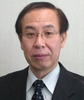
Director, Department of Science and Technology for Nuclear Material Management (STNM) / Deputy Director, Integrated Support Center for Nuclear Nonproliferation and Nuclear Security (ISCN), JAEA
Master of Nuclear Engineering, Nagoya University
Professional CareerMr. Mochiji graduated from the Department of Nuclear Engineering, Graduate School of Engineering, at Nagoya University in 1980.
He started his professional career at the Ningyo-toge Works of the Power Reactor and Nuclear Fuel Development Corporation (PNC, former name of JAEA) as a technical staff member engaged in conversion tests of recovered uranium from Tokai Reprocessing Plant. In 1988, he moved to the Policy Planning Division of PNC Headquarters in Tokyo and from there was dispatched to the Ministry of Foreign Affairs, Nuclear Energy Division, United Nations Bureau in 1991, in charge of coordination with IAEA and OECD/NEA on nuclear related issues.
From July 1993 for 2 years, he conducted research and analysis on U.S. nuclear non-proliferation policies and nuclear technologies at the Embassy of Japan in Washington D.C.
After returning to PNC in 1995, Mr. Mochiji's work focused mainly on nuclear non-proliferation issues, including the Guidelines for the Management of Plutonium (INFCIRC/549), international plutonium management, and transparency measures for the peaceful use of nuclear energy (PNC/US DOE Joint Project). He was Deputy Director of the Tokyo Office and Deputy Director of the Nuclear Nonproliferation Science and Technology Center (NPSTC). He worked with the IAEA, as Director of the JAEA Liaison Office in Vienna between 2007 and 2010. From 2010 to present, as Director of the Department of Science and Technology for Nuclear Material Management (STNM, formerly NPSTC), Mr. Mochiji has been actively in charge of a variety of nuclear nonproliferation related issues, including nuclear material management, physical protection of nuclear materials and nuclear non-proliferation technology development. Holding this "2011 International Forum on Peaceful Use of Nuclear Energy and Nuclear Security" is one of his department's important missions.
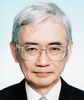
Department of Nuclear Engineering and Management, School of Engineering, The University of Tokyo
Professor, Department of Nuclear Engineering and Management, School of Engineering, The University of Tokyo
Academic record:
Bachelor of Engineering (1972), Department of Nuclear Engineering, Faculty of Engineering, The University of Tokyo
Master of Engineering (1974), Department of Nuclear Engineering, Faculty of Engineering, The University of Tokyo
Doctor of Engineering (1977), Department of Nuclear Engineering, Faculty of Engineering, The University of Tokyo
Research Associate (December 1977- September 1981), Department of Nuclear Engineering, Faculty of Engineering, The University of Tokyo
Associate Professor (October1981-January1994), Nuclear Engineering Research Laboratory, Faculty of Engineering, The University of Tokyo
Professor (February 1994-March 2008), Department of Quantum Engineering and Systems Science, School of Engineering, The University of Tokyo
Professor (April 2008- ), Department of Nuclear Engineering and Management
Nuclear Fuel Cycle, Radioactive Waste Management, Nuclear Energy and Society, Fusion Technology, Nuclear Nonproliferation Technology
He served as President of Atomic Energy Society of Japan in 2011.
Department of Nuclear Engineering, School of Energy Systems Engineering, Seoul National University, Republic of Korea
Professor Il Soon Hwang, a nuclear energy specialist, with Ph. D. in Nuclear Materials Engineering from MIT, M.S. in Mechanical Science from Korea Advanced Institute of Science and Technology and B.S. in Nuclear Engineering from Seoul National University, has expertise in nuclear materials, nuclear plant integrity, nuclear waste transmutation and nuclear non-proliferation. He has led Korean implementation of IAEA Periodic Safety Review (PSR) and the development of the advanced nuclear waste partitioning and transmutation technology, known as PEACER-PyroGreen, while serving as the Director of Nuclear Transmutation Energy Research Center of Korea and as a member of the Korea National Academy of Engineering. He chairs or co-chairs IAEA Advanced Partitioning Expert Group, OECD-NEA Task Force on Lead-alloy Coolant Technology (LACANES), the International Workshop on Nuclear Pyroprocess (NUPYRO), the Forum on Climate Change and Energy Policy, the Nuclear Power Infrastructure Development Seminar (NUPID), the Summit of Honor on Atoms for Peace and Environment (SHAPE), an advisory committee for the Seoul Nuclear Security Summit 2012. He serves as the Vice President of the Korea Nuclear Policy Society, as a member of the Leadership Council of International Forum on Reactor Aging Management (IFRAM) and as a member of the editorial board of International Journal for Nuclear Energy Management as well as an advisory member for the Asia Pacific Leadership Network (APLN). He has been serving as international reviewer for national nuclear R&D programs of Japan, Germany, U.S.A. as well as Korea. Currently he is a member of legal organizations including the Korean Civic Legislation Committee, Korean Commercial Arbitration Board and the Advisory Committee on Reactor Safeguards of the Korea Nuclear Safety & Security Commission. He was decorated with Cavaliere dell'Ordine al Merito della Repubblica Italiana (Italian Knighthood Medal) by the Italian President for excellence in scientific collaboration.
He lives in Seoul with his wife and three daughters.
Professor and Vice Chair, Department of Nuclear Engineering, University of California, Berkeley
Professor Joonhong Ahn received his doctoral degrees from UC Berkeley (PhD, 1988) and University of Tokyo (D.Eng., 1989), and joined the faculty of UC Berkeley in 1995. His research focuses on performance assessment for advanced nuclear fuel cycles and geological disposal of radioactive wastes, including: (1) mathematical modeling and computational analyses for performance assessment of geological disposal of radioactive wastes, in which radiological risk and criticality safety are quantitatively evaluated as performance metrics, by particularly focusing on radionuclide transport through a geological medium and engineered barriers and long-term evolution of engineered-barrier materials, and (2) analysis of mass-flow in advanced nuclear fuel-cycle systems. These two are being combined to optimize the nuclear-power system from the viewpoint of risk minimization by exploring relationship between the fuel-cycle system parameters and geologic repository performance. He has also been active in the field of Science-Technology-Society interaction in the back-end of fuel cycle, particularly after the Fukushima accident. He led numerous joint research projects with institutions of Japan, South Korea, US, and IAEA.
Honors and Awards:
-
In March 2012, he received the Outstanding Achievement Award from Division of Nuclear Fuel Cycle and Environment, Atomic Energy Society of Japan, Tokyo, Japan, together with 6 other co-authors, for the book entitled "Engineering for Radioactive Waste Management" published in February 2011.
In June 2011, he was granted Minner Faculty Fellow in Engineering Ethics and Professional/Social Responsibility from College of Engineering, UC Berkeley.
In 2007, he became a fellow of School of Engineering, University of Tokyo.
Deputy Director, JAEA/STNM / Professor (appointed), Nuclear Non-Proliferation Research Laboratory, Department of Nuclear Engineering and Management, School of Engineering, The University of Tokyo
Dr. Yusuke Kuno had worked for the Tokai Reprocessing Plant of the Power Reactor and Nuclear Fuel Development Corporation (PNC) for 20 years, particularly in the area of development of Safeguards verification measurement techniques and accountancy analysis, in cooperation with Los Alamos, Lawrence Livermore, Oak Ridge National Laboratories and IAEA. He was dispatched to Harwell Laboratory and Dounreay Nuclear Power Development Establishment of UKAEA as a researcher in 1986/87. He led the Analytical Laboratory of the Tokai Reprocessing Plant from 1993 to 1999 as General Manager.
He was appointed the Head of Safeguards Analytical Laboratory (SAL) of the IAEA in Seibersdorf Austria in 1999, and had led the IAEA laboratory staff members in the nuclear verification measurement and environmental sampling programs of Safeguards for seven years, by which he got involved in the verification activities of Iraq and Iran issues.
His present position is Deputy Director and Prime Scientist, STNM of JAEA, in which he leads development of Safeguards and other non-proliferation technologies, such as proliferation resistance and transparency for future nuclear fuel cycle. He also promotes education and research on nuclear non-proliferation and security in the Graduate School of The University of Tokyo. He is the vice chairman of the Nuclear Non-Proliferation Committee in The University of Tokyo. He received the PhD in nuclear chemistry from The University of Tokyo.