
Promote Understanding
JAEA President
March 1960:
Completed Master's Course in Graduate School of Engineering, Kyoto University
March 1958:Graduated from School of Applied Physics, Faculty of Engineering, Kyoto University
Professional history:June 2013:
President, JAEA
November 2012:Chairman, Japan Nuclear Safety Institute
April 2000:Chairman, Nuclear Safety Commission
November 1998:President, Japan Atomic Energy Research Institute (JAERI) (After experience as Vice President)
February 1993:Executive Director, JAERI
September 1989:Deputy Director General, Tokai Research Establishment, JAERI
August 1986:Director, Office of Planning, JAERI
April 1985:Director, Department of Reactor Engineering, Tokai Research Establishment, JAERI
Ambassador, US Department of State
Ambassador Bonnie Jenkins was nominated by President Barack Obama in April 2009 and confirmed by the U.S. Senate in June 2009 as the Department of State's Coordinator for Threat Reduction Programs in the Bureau of International Security and Nonproliferation. Ambassador Jenkins promotes the coordination of Department of State Cooperative Threat Reduction (CTR) and U.S. government programs in chemical, biological, nuclear and radiological security (CBRN). She also works closely with international partners in coordinating global CBRN security programs and funding to help ensure a coordinated approach when governments implement these programs internationally. She is the U.S. Representative to the Global Partnership Against the Spread of Weapons and Materials of Mass Destruction (Global Partnership) and Chaired the Global Partnership in 2012. She is the Department of State lead on the Nuclear Security Summit, and she coordinates the Department of State's activities related to the four-year effort to secure all vulnerable nuclear material. Ambassador Jenkins is also engaged in the Global Health Security Agenda (GHSA), a multi-sectoral initiative dedicated to reducing infectious disease threats around the world. She works closely on this initiative with domestic and international partners in the security (with a focus on biosecurity), animal and human health, development, and law enforcement sectors and leads U.S. government outreach to domestic and international non-governmental organizations. Ambassador Jenkins also works closely with the Department of Homeland Security (DHS) and the U.S chemical Industry in strengthening global security and safety of chemical weapons precursors.
Ambassador Jenkins has focused on a U.S. coordinated effort on threat reduction in Africa, culminating in a "Threat Reduction in Africa" U.S. interagency engagement program working closely with the Defense Threat Reduction Agency (DTRA) and AFRICOM. She also works closely with relevant international organizations such as the World Health Organization (WHO), the Organization for the Prohibition of Chemical Weapons (OPCW), the International Criminal Police Organization (INTERPOL) and the International Atomic Energy Agency (IAEA).
Ambassador Jenkins is Chair of the IAEA Nuclear Security Training and Support Center Network, is on the Scientific Committee of the Annual International Symposium on Biosecurity and Biosafety, and is on the Steering Committee of the Emerging Leaders in Biosecurity. Ambassador Jenkins is also the Department of State's Leadership Liaison for the Veterans at State affinity group, and is a member of the Department's Diversity Governance Council.
Ambassador Jenkins was a fellow at the Belfer Center for Science and International Affairs at the John F. Kennedy School, Harvard University. She has a Ph.D. in International Relations from the University of Virginia; an LL.M. in International and Comparative Law from the Georgetown University Law Center; an M.P.A. from the State University of New York at Albany; a J.D. from Albany Law School; and a B.A. from Amherst College. She also attended The Hague Academy for International Law.
Senior Fellow, Harvard Kennedy School
Dr. Olli Heinonen is a Senior Fellow at the Harvard Kennedy School of Government's Belfer Center for Science and International Affairs. His research and teachings include: nuclear non-proliferation and disarmament, verification of treaty compliance, enhancement of the verification work of international organizations, and transfer and control of peaceful uses of nuclear energy.
Before joining the Belfer Center in September 2010, Olli Heinonen served 27 years at the International Atomic Energy Agency in Vienna. Heinonen was the Deputy Director General of the IAEA, and head of its Department of Safeguards. Prior to that, he was Director at the Agency's various Operational Divisions, and as inspector including at the IAEA's overseas office in Tokyo, Japan.
Heinonen led teams of international investigators to examine nuclear programmes of concern around the world and inspected nuclear facilities in South Africa, Iraq, North Korea, Syria, Libya and elsewhere, seeking to ensure that nuclear materials were not diverted for military purposes. He also spearheaded efforts to implement an analytical culture to guide and complement traditional verification activities. He led the Agency's efforts to identify and dismantle nuclear proliferation networks, including the one led by Pakistani scientist A.Q. Khan, and he oversaw its efforts to monitor and contain Iran's nuclear programme.
Prior to joining IAEA, he was a Senior Research Officer at the Technical Research Centre of Finland Reactor Laboratory in charge of research and development related to nuclear waste solidification and disposal. He is co-author of several patents on radioactive waste solidification.
Olli Heinonen studied radiochemistry and completed his PhD dissertation in nuclear material analysis at the University of Helsinki.
Former Nuclear Regulation Authority Commissioner
April 1967;
Passed the Diplomatic Exam (while at the Law Faculty of Tokyo University); joined the Ministry of Foreign Affairs (MOFA)
August 1997;Director-General, International Cooperation Bureau, MOFA
August 1999;Director-General, the Secretariat of the International Peace Cooperation Headquarters, Cabinet Office
January 2001;Under-Secretary-General, the United Nations (in charge of humanitarian affairs)
September 2003;Ambassador of Japan to Australia
November 2004;Ambassador of Japan to the United Nations
October 2007;Senior Vice-President, Japan International Cooperation Agency
September 2011;Advisor to the President, Japan International Cooperation Agency
December 2011;Commission member, the Diet-appointed Fukushima Nuclear Accident Independent Investigation Commission
September 2012 - September 2014Commissioner, Nuclear Regulation Authority
Director of Integrated Support Center for Nuclear Nonproliferation and Nuclear Security (ISCN), JAEA
Master of Nuclear Engineering, Nagoya University
Professional CareerMr. Mochiji graduated from the Department of Nuclear Engineering, Graduate School of Engineering, at Nagoya University in 1980.
He started his professional career at the Ningyo-toge Works of the Power Reactor and Nuclear Fuel Development Corporation (PNC, former name of JAEA) as a technical staff member engaged in conversion tests of recovered uranium from Tokai Reprocessing Plant. In 1988, he moved to the Policy Planning Division of PNC Headquarters in Tokyo and from there was dispatched to the Ministry of Foreign Affairs, Nuclear Energy Division, United Nations Bureau in 1991, in charge of coordination with IAEA and OECD/NEA on nuclear related issues.
From July 1993 for 2 years, he conducted research and analysis on U.S. nuclear non-proliferation policies and nuclear technologies at the Embassy of Japan in Washington D.C.
After returning to PNC in 1995, Mr. Mochiji's work focused mainly on nuclear non-proliferation issues, including the Guidelines for the Management of Plutonium (INFCIRC/549), international plutonium management, and transparency measures for the peaceful use of nuclear energy (PNC/US DOE Joint Project). He was Deputy Director of the Tokyo Office and Deputy Director of the Nuclear Nonproliferation Science and Technology Center (NPSTC). He worked with the IAEA, as Director of the JAEA Liaison Office in Vienna between 2007 and 2010. From 2010 to present, as Director of the Integrated Support Center for Nuclear Nonproliferation and Nuclear Security (ISCN, formerly NPSTC, STNM), Mr. Mochiji has been actively in charge of a variety of nuclear nonproliferation related issues, including nuclear material management, physical protection of nuclear materials and nuclear non-proliferation technology development. Holding this "The 2014 International Forum on Peaceful Use of Nuclear Energy, Nuclear Non-Proliferation and Nuclear Security" is one of his department's important missions.
President, Nuclear Material Control Center
Mr. Murakami obtained his B.Sc., in Physics at the Science University of Tokyo, Japan, and his Masters degree in Nuclear Engineering at Pennsylvania State University, USA.
Mr. Murakami Joined the IAEA in the Department of Safeguards (Operations) in 1982. Since 1991, he worked at IAEA, as Director of Safeguards in Division of Inspections, in the Department of Safeguards, 1996 as Director of the Division of Operations C, in the Department of Safeguards, 2005-2009 as Senior Director.
Areas of responsibility included safeguards implementation in all European Union States, Eastern European States, and NIS States (former Soviet Union). Actively engaged in the technical support and establishment of the nuclear material control systems in the former Soviet Union and the continuing effort to improve the condition of nuclear material accounting and control in the region.
2010-2013 Visiting professor at Tokyo City University, Graduate School (Nuclear Safety Engineering Department).
2010- Member of IAEA Director General's Standing Advisory Group on Safeguards Implementation (SAGSI).
2014.6- President of Nuclear Material Control Center (NMCC) in Japan. Vice president of The Institute of Nuclear Materials Management (INMM) in Japan Chapter.
Director, Division of Concepts and Planning, Department of Safeguards, IAEA
Ms. Jill N Cooley is Director of the Division of Concepts and Planning in the International Atomic Energy Agency's (IAEA) Department of Safeguards responsible for departmental strategic planning and R&D activities, the development and promotion of safeguards policy, concepts and approaches, and the organization and conduct of safeguards-related training for Department staff and personnel of Member States.
Ms. Cooley has over 35 years of experience with international and domestic safeguards, particularly in the development of safeguards for uranium enrichment plants. She has been with the IAEA for 20 years, initially as head of the Statistical Analysis Section where she was responsible for coordinating the development and implementation of statistical methods for safeguards data evaluation and for organising the Agency's environmental sampling programme for safeguards.
She is currently managing the implementation of the long-range strategic plan for the Department and the further evolution of safeguards implementation focused at the State level. Previous to her assignments with the IAEA, Ms. Cooley was manager of the Safeguards Program of Lockheed Martin Energy Systems in Oak Ridge, Tennessee, responsible for technical support to the IAEA and various US federal agencies in the development and implementation of international safeguards inspection approaches and procedures. She has also served as technical advisor to the U.S. Department of States in the Office of Nuclear Technology and Safeguards.
Ms. Cooley has advanced degrees in physics and nuclear engineering from the University of Wisconsin, USA.
Director, Office for International Nuclear Energy Cooperation, Agency for Natural Resources and Energy, Ministry of Economy, Trade and Industry (METI)
1991-1995
Faculty of Law, University of Tokyo
2000-2002School of International and Public Affairs, Columbia University
2001-2002Columbia Law School, Columbia University (LL.M)
Professional Experience:2011.7-
Director of Office for International Nuclear Energy Cooperation
Agency for Natural Resources and Energy
Also, Member of Office for Establishment of New Regulatory Authority under Minister of State for the Nuclear Power Policy and Administration (- 2012.9)
Senior Deputy Director, Policy Planning and Coordination Division
Minister's Secretariat
Senior Deputy Director, Corporate Affairs Division
conomic and Industrial Policy Bureau
Senior Deputy Director, Nuclear Energy Policy Planning Division
Agency for Natural Resources and Energy
Deputy Director
Nuclear Facilities Development and Nuclear Fuel Cycle Industry Division
Agency for Natural Resources and Energy
Deputy Director
Petroleum and Natural Gas Division
Agency for Natural Resources and Energy, METI
Joined Ministry of International Trade and Industry (MITI)
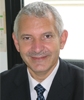
Nuclear Counsellor at the Embassy of France in Japan
Mr. Christophe Xerri has been assigned as Nuclear Counsellor at the Embassy of France in Japan since December 1st, 2011.
After graduating from Ecole Centrale de Lyon (Engineering - 1984) and Salford University (UK – Master of Science - 1984) and Institut Supérieur des Affaires (MBA - 1988), Mr. Christophe Xerri started his career in a Japanese bank in Tokyo.
He then joined AREVA Group in 1991, where he got involved in the promotion of nuclear fuel recycling, in the implementation of the first return of reprocessing residues to Japan, then in investments in uranium mining and in innovation and technological developments (including joint programs with CEA).
In 2000, he moved to the field of International Relations and Non-Proliferation, acted as expert to the IAEA and chaired a European expert working group on Safeguards implementation. This position included interaction with the International Directorate of CEA and with the Ministry of Foreign Affairs.
From 2003 to 2007, he was appointed personal assistant to the CEO of AREVA for international affairs.
He moved to Tokyo in 2007 to join AREVA Japan as Managing Director - Marketing and Industrial Strategy. In this position, he was involved in developing relationship with MHI and in the creation of the MNF Joint-Venture. He was then seconded by AREVA to the position of Director and Senior Executive Vice President of Mitsubishi Nuclear Fuel (MNF), a joint-venture created in Japan in 2009 between AREVA, and Mitsubishi Heavy Industries (MHI) in the field of nuclear fuel design and fabrication.
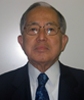
Former Deputy Chairman, Japan Atomic Energy Commission, Visiting Researcher, JIIA
The University of Tokyo, Faculty of Law
Career Experience:1958
Joined Ministry of Foreign Affairs
1958-60Studies at DePauw University and Princeton University (USA)
1967-71Second and First Secretary, Embassy of Japan in the United Kingdom (UK)
1973-75Director, South-West Asia Division, Asian Affairs Bureau, Ministry of Foreign Affairs
1975-77Director, Korea Division, Asian Affairs Bureau, Ministry of Foreign Affairs
1977-79Counselor, Embassy of Japan in the UK (Research Associate, International Institute for Strategic Studies)
1979-81Minister, Embassy of Japan in Mexico
1981-85Deputy Director-General, United Nations Bureau, Ministry of Foreign Affairs
1985-87Consul-General of Japan in Honolulu, Hawaii (USA)
1987-89Director-General for Scientific and Technological Affairs, Ministry of Foreign Affairs
1989.7-1992.3Governor, Board of Governors, International Atomic Energy Agency (1989.10-1990.10 Chairman, Board of Governors)
1989.11-1992.3Ambassador Extraordinary and Plenipotentiary, Permanent Mission of Japan to the International Organizations in Vienna (Austria)
1992.5-1992.12Ambassador Extraordinary and Plenipotentiary, in charge of Assistance to former Soviet Union
1993.3-1993.8Ambassador Extraordinary and Plenipotentiary, in charge of Japan-North Korea Normalization Talks and Asia-Pacific Economic Cooperation (APEC)
1994.12Ambassador in charge of Korean Peninsula Energy Development Organization (KEDO)
1996.1Ambassador Extraordinary and Plenipotentiary, Embassy of Japan in New Zealand
1998.1Commissioner, Atomic Energy Commission
2001.1Vice-chairman, Atomic Energy Commission
2004.1-2005.3Special Assistant to the Minister for Foreign Affairs
2006.7-Adjunct Senior Fellow, The Japan Institute of International Affairs (JIIA)
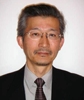
Deputy Director, Integrated Support Center for Nuclear Nonproliferation and Nuclear Security (ISCN), JAEA, Professor (appointed), University of Tokyo
Dr. Yusuke Kuno worked for the Tokai Reprocessing Plant of the Power Reactor and Nuclear Fuel Development Corporation (PNC) for 20 years, particularly in the area of development of Safeguards verification measurement techniques and accountancy analysis, in cooperation with US National Laboratories and IAEA. He was dispatched to Harwell Laboratory and Dounreay Nuclear Power Development Establishment of UKAEA as a researcher in 1986/87. He led the Analytical Laboratory of the Tokai Reprocessing Plant from 1993 to 1999 as General Manager.
He was appointed the Head of Safeguards Analytical Laboratory (SAL) of the IAEA in Seibersdorf Austria in 1999, and had led the IAEA laboratory staff members in the nuclear verification measurement and environmental sampling programs of Safeguards for 7 years.
His present position is Deputy Director of Integrated Support Center for Nuclear Proliferation and Security, JAEA, and Professor appointed for Department of Nuclear Engineering and Management, Graduate School of the University of Tokyo. He is the vice chairman of the Nuclear Non-Proliferation Committee in The University of Tokyo. He received the PhD in nuclear chemistry from the University of Tokyo.
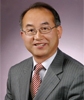
Director General, International Nuclear Nonproliferation and Security Academy (INSA), Korea Institute of Nonproliferation and Control (KINAC)
After finishing B.A. at Yonsei University in 1988, Dr. Choe got his Master's (1991) and Ph.D (1998) in Political Sciences at Paris University of France. The doctoral thesis was titled: « Nuclear Policy of France ».
After having academic research and lecturer experience at Yonsei University in Korea as a Research Professor since Sep., 1998, Dr. Choe has worked at nuclear control related organization of the ROK from Oct. 2001 till now.
Actually, Dr. Choe is the Director General of the International Nuclear Nonproliferation and Security Academy (INSA) in the Korea Institute of Nuclear Nonproliferation and Control (KINAC).

Director and Senior Fellow Proliferation Prevention Program, Center for Strategic and International Studies (CSIS)
Ms. Sharon Squassoni is a senior fellow and director of the Proliferation Prevention Program at CSIS. Prior to joining CSIS, Ms. Squassoni was a senior associate in the Nuclear Nonproliferation Program at the Carnegie Endowment for International Peace. From 2002-2007, Ms. Squassoni advised Congress as a senior specialist in weapons of mass destruction at the Congressional Research Service, Library of Congress. Ms. Squassoni also served in the executive branch of government from 1992 to 2001 in the State Department and Arms Control and Disarmament Agency. She began her government career in nuclear safeguards. She is the recipient of various government service awards, has published widely and is a frequent commentator for U.S. and international media outlets.
Ms. Squassoni received degrees in political science, public management and national security strategy, lastly from the National War College.
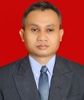
Acting Deputy Chairman for Licensing and Inspection, Indonesia Nuclear Energy Regulatory Agency (BAPETEN)
Mr. Sugeng SUMBARJO, was graduated from Gadjah Mada University (Indonesia) in the field of Nuclear Engineering in 1989 and master degree for Nuclear Engineering from Tokai University (Japan) in 1995.
Professional Career:In 1990 joined to The National Nuclear Energy Agency (BATAN) Indonesia, then in 1998 moved to the Indonesian Nuclear Energy Regulatory Agency (BAPETEN) and promoted to be the Head of Division for IT and Data Processing. In 2008, he was promoted to Head of Planning Bureau, and in 2011 to Director for Licensing of Radiation Facilities, then in 2013 to Director of Inspection for Radiation Facilities. From August 2014 appointed as acting Deputy Chairman for Licensing and Inspection of BAPETEN until now.
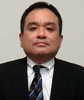
Director, Office for Nuclear Non-Proliferation Science and Technology, Research and Development Bureau, Ministry of Education, Culture, Sports, Science and Technology (MEXT)
Dr. Tsukasa YAMAMURA has been the Director of the Office for Nuclear Non-proliferation Science and Technology, Research and Development Bureau, Ministry of Education, Culture, Sports, Science and Technology (MEXT) of Japan since April 2014. He joined Power Reactor and Nuclear Fuel Development Corporation (PNC, predecessor organization of Japan Atomic Energy Agency (JAEA)) in 1990 after the graduation from Waseda University (School of Law). After he worked at Fast Breeder Reactor Monju, Contracting Division and Accounting Division of PNC, he was assigned to the Legal Affairs Section of Organisation for Economic Cooperation and Development (OECD) /Nuclear Energy Agency (NEA) from September 1997 until September 1999. After coming back to Japan, he was engaged in the international cooperation for nuclear energy R&D and nuclear non-proliferation policy research in JAEA.
He received his Ph.D in nuclear non-proliferation from the University of Tokyo in March 2011.
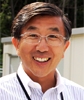
Deputy Director, ISCN/JAEA
Mr. Yosuke Naoi is a deputy director of the integrated support center for nuclear nonproliferation and nuclear security which was established in December 2010 in JAEA followed by the Japanese statement at the Nuclear Security Summit, April 2010. He had been involved in the heavy water reactor development project for totally 20 years since 1983. From 1998 to 2000, he was on loan to the Japan Ministry of Foreign Affairs as a technical adviser for North Korean nuclear issue and the KEDO (Korean Peninsula Energy Development Organization) project. He was assigned for the research of the mechanism of assurance of fuel supply based on the contract with Cabinet Assistance Office of GOJ for three years since 2005. From 2010 he was engaged in the preparation for establishment of the integrated support center.