
Promote Understanding
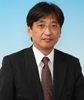
JAEA Executive Vice President
March 1985 :
Graduated from the Department of Nuclear Engineering in the Faculty of Engineering, Nagoya University
Professional history:August 2015 :
Executive Vice President, Japan Atomic Energy Agency
January 2015 :Deputy Director-General, Research and Development Bureau, Minister of Education Culture, Sports, Science and Technology (MEXT), doubles as Deputy Director-General, Cabinet Office
January 2014 :Director, Policy Division, Minister's Secretariat, MEXT
April 2012 :Director, Research and Development Policy Division, Research and Development Bureau, MEXT, doubles as Counselor, Cabinet Secretariat, Cabinet Office
April 2010 :Director, Environment and Energy Division, Research and Development Bureau, MEXT
July 2009 :Director, Atomic Energy Division, Research and Development Bureau, MEXT
September 2007 :Director, Research Environment and Industrial Cooperation Division, Research Promotion Bureau, MEXT
January 2006 :Group Director, Planning and Coordination Group, Next-generation Supercomputer Development Headquarters, RIKEN
June 2000 :Director, Office for Regional Relations for R&D Facilities, Policy Division, Atomic Energy Bureau, Science and Technology Agency
April 1996 :First Secretary, Embassy of Japan in the Russian Federation, Ministry of Foreign Affairs

Deputy Administrator for Defense Nuclear Nonproliferation, National Nuclear Security Administration, US Department of Energy (NNSA/DOE)
Ms. Anne Harrington was sworn in as Deputy Administrator for Defense Nuclear Nonproliferation for the National Nuclear Security Administration in October 2010. Previously, Ms. Harrington was the Director of the U.S. National Academy of Sciences Committee on International Security and Arms Control (CISAC) a position she held from March 2005 to October 2010. While at CISAC, she managed several key studies on a variety of nonproliferation, threat reduction and other nuclear security issues, including: Global Security Engagement: A New Model for Cooperative Threat Reduction (2009); Future of the Nuclear Security Environment in 2015 (2009); Internationalization of the Nuclear Fuel Cycle: Goals, Strategies, and Challenges (2008, joint report with Russian Academy of Sciences); and English-Chinese Chinese-English Nuclear Security Glossary (2008, produced jointly with the Chinese Scientists Group for Arms Control).
Ms. Harrington served for 15 years in the U.S. Department of State, where she was Acting Director and Deputy Director of the Office of Proliferation Threat Reduction and a senior U.S. government expert on nonproliferation and cooperative threat reduction. She has dedicated much of her government career to developing policy and implementing programs aimed at preventing the proliferation of WMD and missile expertise in Russia and Eurasia, and also launched similar efforts Iraq and Libya.
Her State Department assignments include serving as the U.S. senior coordinator for efforts to redirect former Soviet WMD/missile experts 1993-1998. She was based in Moscow from 1991 to 1993, where she was the Senior Advisor to the U.S. Delegation to the International Science and Technology Center (ISTC) Preparatory Committee and Science Analyst at the U.S. Embassy in Moscow. She was instrumental in negotiating the agreements that established the ISTC and the Science and Technology Center in Ukraine (STCU), and the agreement between the United States and Kazakhstan for the secure storage of spent fuel and safe shutdown of the Aktau BN-350 breeder reactor.
She was selected to attend the National Defense University's National War College in 2002-2003, where she was also a research fellow and authored the paper, "Reducing the Threat from Biological Weapons: Perspectives on U.S. Policy." Ms. Harrington has been author or co-author on a number of papers on countering biological threats.
Ms. Harrington graduated with a bachelor's of arts degree from St. Lawrence University, an M.A. from the University of Michigan, and an M.S. from the National Defense University National War College. She has two children, Meredith and Owen Lynch.
出典:http://nnsa.energy.gov/aboutus/ourleadership/harringtonbio
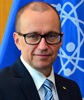
Deputy Director General, International Atomic Energy Agency (IAEA)
Mr. Tero Varjoranta assumed the post of Deputy Director General and Head of the Department of Safeguards on 1 October 2013.
Prior to this, he was the Director General of the Radiation and Nuclear Safety Authority, STUK, in Finland. Between 2010 and 2012, Mr. Varjoranta served as a Director in the IAEA Department of Nuclear Energy, having previously worked as Division Manager in the International Science and Technology Centre in Moscow.
Mr. Varjoranta has served as President of ESARDA, President of the European Nuclear Regulators Group (ENSREG) and as a member of SAGSI for seven years. He is a physicist by education (MSc and PhL) from Helsinki University.
Reference: https://www.iaea.org/about/organizational-structure/department-of-safeguards/deputy-director-general
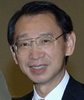
Commissioner of the Japan Atomic Energy Commission
Prof. Nobuyasu Abe is serving as a Commissioner of the Japan Atomic Energy Commission since April 2014. He served as United Nations Under-Secretary-General for Disarmament Affairs (2003-06) and Director-General for Arms Control and Science Affairs (1997-99) of the Ministry of Foreign Affairs of Japan. Prior to the current assignment he served as Director of the Center for the Promotion of Disarmament and Non-Proliferation at the Japan Institute of International Affairs (2008-14).
He performed three ambassadorial assignments; ambassador of Japan to the IAEA and other international organizations in Vienna (1999-2001), Saudi Arabia (2001-03) and Switzerland (2006-08). He contributed to the works of the International Commission on Nuclear Nonproliferation and Disarmament (ICNND; 2008-10) as a member of its advisory board. He currently serves on the Council of the United Nations University (UNU; 2010-) and Asia-Pacific Leadership Network for Nuclear Non-proliferation and Disarmament (APLN; 2011-).
He studied at Tokyo University (1964-67), at Amherst College (1967-69, BA), and at Harvard (Weatherhead) Center for International Affairs (WCFIA; 1986-87). He has taught as a visiting scholar at Sophia University, Tokyo University, Doshisha University, Akita International University and the International Christian University in Japan.
He is a member of the International Institute for Strategic Studies (IISS; 1984-), Japan Association of Disarmament Studies (JADS; 2008-). His writings include an essay titled, "Denuclearization of the Korean Peninsula; A New Perspective" for Korea Review. He was born in Akita, Japan, in September 1945.
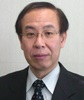
Director of Integrated Support Center for Nuclear Nonproliferation and Nuclear Security (ISCN), JAEA
Master of Nuclear Engineering, Nagoya University
Professional CareerMr. Mochiji graduated from the Department of Nuclear Engineering, Graduate School of Engineering, at Nagoya University in 1980.
He started his professional career at the Ningyo-toge Works of the Power Reactor and Nuclear Fuel Development Corporation (PNC, former name of JAEA) as a technical staff member engaged in conversion tests of recovered uranium from Tokai Reprocessing Plant. In 1988, he moved to the Policy Planning Division of PNC Headquarters in Tokyo and from there was dispatched to the Ministry of Foreign Affairs, Nuclear Energy Division, United Nations Bureau in 1991, in charge of coordination with IAEA and OECD/NEA on nuclear related issues.
From July 1993 for 2 years, he conducted research and analysis on U.S. nuclear non-proliferation policies and nuclear technologies at the Embassy of Japan in Washington D.C.
After returning to PNC in 1995, Mr. Mochiji's work focused mainly on nuclear non-proliferation issues, including the Guidelines for the Management of Plutonium (INFCIRC/549), international plutonium management, and transparency measures for the peaceful use of nuclear energy (PNC/US DOE Joint Project). He was Deputy Director of the Tokyo Office and Deputy Director of the Nuclear Nonproliferation Science and Technology Center (NPSTC). He worked with the IAEA, as Director of the JAEA Liaison Office in Vienna between 2007 and 2010. From 2010 to present, as Director of the Integrated Support Center for Nuclear Nonproliferation and Nuclear Security (ISCN, formerly NPSTC, STNM), Mr. Mochiji has been actively in charge of a variety of nuclear nonproliferation related issues, including nuclear material management, physical protection of nuclear materials and nuclear non-proliferation technology development. Holding this "The International Forum on Peaceful Use of Nuclear Energy, Nuclear Non-Proliferation and Nuclear Security" is one of his department's important missions.

Former Director of the Office of Nuclear Security, Department of Nuclear Safety and Security, IAEA
As Director of the IAEA Office of Nuclear Security from 2003 to 2011, Dr. Nilsson was responsible for developing and establishing the IAEA nuclear security programme. Through consecutive Nuclear Security Plans, the latest for 2010-2013, the IAEA nuclear security programme evolved. Key elements of the IAEA programme were established; the IAEA Nuclear Security Guidance published in a dedicated Nuclear Security Series; broader scope IAEA review services; a wide programme of assistance to strengthen nuclear security in individual countries; dedicated plans (Integrated Nuclear Security Support Plans) for coordination and follow-up; national and regional Nuclear Security Support Centers, also referred to as Centers of Excellence, and a broad programme for training and University education. The IAEA illicit trafficking database programme became the solid reliable source of information regarding trafficking in nuclear and radioactive substances. Before appointed as the IAEA Director of Nuclear Security, Dr. Nilsson served as the Senior Coordinator in the IAEA Department of Safeguards, responsible for the IAEA state evaluation process.
Earlier in Sweden, Dr. Nilsson had various managerial and leadership positions at the Swedish Nuclear Power Inspectorate, including for IAEA safeguards, bilateral nuclear interaction and control and coordination of the Swedish nuclear security support to the Newly Independent States and the Baltic States.
As Medical Doctor and a Master of Science, Anita Nilsson now leads a network of experts for nuclear security, working in bilateral programmes and with non-governmental organizations. Dr. Nilsson is currently a member of the Board of Directors the Swedish ISEC Industrial Security AB, Senior Associate to the Partnership for Global Security, member of the Global Nexus Initiative, Associate Fellow to Chatham House, Policy Advisory and Senior Fellow to the CITS of the University of Georgia, Advisor (nuclear security) to the Federation of American Scientists and an international partner to the FMWG (Fissile Material Working Group).
Former Ambassador and Permanent Representative of Denmark to the IAEA
Education:
Master's Degree in Law and Bachelor's Degree in Roman languages (specialising in Spanish) from Copenhagen University 1974 and 1970 respectively.
Career in the Diplomatic Service of Denmark 1974-2011:
Adviser on International Law and EU Law, Permanent Undersecretary for Administration, Consular Affairs, Protocol and Information
Ambassadorial postings: Ambassador and Permanent Representative of Denmark to the IAEA, OSCE and CTBTO in Vienna (2005-2011)
Ambassador to the Netherlands and Permanent Representative to the OPCW in The Hague (2001-2005)
Ambassador to Spain (1994-2001)
Ambassador to Venezuela (1989-91)
Academic Career
Teacher on International Law, EU Law and Human Rights Law at Copenhagen University, Co-author of the text book on International Law used at Copenhagen University, 1989.
Currently working as an independent Adviser on International political and legal issues, with special focus on nuclear security, inter alia involved as one of the authors of a Draft International Convention on Nuclear Security, 2014, and in a number of international meetings about nuclear security.

Director, Senior Research Fellow, Center for Global Governance, the Asan Institute for Policy Studies, the Republic of Korea
Dr. PARK Jiyoung is a senior research fellow in Science and Technology Policy Program and the director of the Center for Global Governance at the Asan Institute for Policy Studies. Previously, she was a research fellow and managing director of the R&D Feasibility Analysis Center at the Korea Institute of S&T Evaluation and Planning (KISTEP) and also a visiting research scientist at the Center for Innovation at the University of Maryland. Dr. Park's research focuses on the study of policy and management issues for nuclear technology, R&D for global green growth policies, economic analysis of R&D programs, and developing support for the formulation of evidence-based policies in the science and technology fields. Her recent publications include, "Assessment System for Feasibility Analysis of National R&D Programs: The case of Korea," International Journal of Innovation and Technology Management (2011). Dr. Park received her B.S. and M.S. in nuclear engineering and an M.S. in public policy from Seoul National University and her Ph.D. in nuclear engineering and radiological sciences from the University of Michigan.
Academic Background
M.S. in Policy Science, Seoul National University (2009)
Ph.D. in Nuclear Engineering & Radiological Sciences, University of Michigan (1999)
M.S. in Nuclear Engineering & Radiological Sciences, Seoul National University (1993)
B.S. in Nuclear Engineering & Radiological Sciences, Seoul National University (1991)
Professional Background
Visiting Research Scientist, Center for Innovation, University of Maryland, USA (2009∼2010)
Managing Director, R&D Feasibility Analysis Center, KISTEP, Seoul, Korea (2006∼2009)
Research Fellow, KISTEP, Seoul, Korea (2000∼2012)
Researcher, Catholic Research Institutes of Medical Science, Soeul, Korea (2000)
Director, Office for Nuclear Non-Proliferation Science and Technology, Research and Development Bureau, Ministry of Education, Culture, Sports, Science and Technology (MEXT)
Dr. Tsukasa YAMAMURA has been the Director of the Office for Nuclear Non-proliferation Science and Technology, Research and Development Bureau, Ministry of Education, Culture, Sports, Science and Technology (MEXT) of Japan since April 2014. He joined Power Reactor and Nuclear Fuel Development Corporation (PNC, predecessor organization of Japan Atomic Energy Agency (JAEA)) in 1990 after the graduation from Waseda University (School of Law). After he worked at Fast Breeder Reactor Monju, Contracting Division and Accounting Division of PNC, he was assigned to the Legal Affairs Section of Organisation for Economic Cooperation and Development (OECD) /Nuclear Energy Agency (NEA) from September 1997 until September 1999. After coming back to Japan, he was engaged in the international cooperation for nuclear energy R&D and nuclear non-proliferation policy research in JAEA.
He received his Ph.D in nuclear non-proliferation from the University of Tokyo in March 2011.

Deputy Director, ISCN/JAEA
Mr. Yosuke Naoi is a deputy director of the integrated support center for nuclear nonproliferation and nuclear security which was established in December 2010 in JAEA followed by the Japanese statement at the Nuclear Security Summit, April 2010. He had been involved in the heavy water reactor development project for totally 20 years since 1983. From 1998 to 2000, he was on loan to the Japan Ministry of Foreign Affairs as a technical adviser for North Korean nuclear issue and the KEDO (Korean Peninsula Energy Development Organization) project. He was assigned for the research of the mechanism of assurance of fuel supply based on the contract with Cabinet Assistance Office of GOJ for three years since 2005. From 2010 he was engaged in the preparation for establishment of the integrated support center.

Executive Director of the IISS-Americas office and head of the Non-Proliferation and Nuclear Policy Programme
Mr. Mark Fitzpatrick is Executive Director of the Washington-based Americas office of the International Institute for Strategic Studies (IISS), as of December 2015. He also continues to head the IISS Non-Proliferation and Disarmament Programme, a position he held at the London headquarters since late 2005. His IISS program focuses on proliferation challenges and on nuclear security and nuclear disarmament issues. He is the author of Overcoming Pakistan's Nuclear Dangers (2014) and The Iranian Nuclear Crisis: Avoiding worst-case outcomes (2008). He is also the editor of six IISS Strategic Dossiers on countries and regions of proliferation concern, most recently on North Korea (July 2011) and Iran (February 2011). His next book, to be published in February 2016, is entitled Asia's Latent Nuclear Powers: Japan, South Korea and Taiwan. He has lectured throughout the world and is a frequent media commentator on proliferation topics. He is a founding member of the EU Non-Proliferation Consortium. He is also a member of: the World Economic Forum Global Agenda Council on Nuclear Security.
Fitzpatrick joined IISS in October 2005 after a 26-year career in the US Department of State, including as Deputy Assistant Secretary for Non-Proliferation (acting). His diplomatic postings also included Vienna, in charge of liaison with the International Atomic Energy Agency, as well as postings in Seoul, Tokyo (twice) and Wellington. He earned a Master's degree in Public Policy from the Kennedy School of Government at Harvard University, and he attended a one-year post-graduate study program (1990-1991) at the Japanese National Institute of Defence, where his dissertation on Korean unification was published in journals in Japan and South Korea.

Director, Strategic Planning and Integration, Office of Defense Nuclear Nonproliferation, National Nuclear Security Administration, U.S. Department of Energy
Mr. Andrew Hood is responsible for leading strategic studies and program integration for all nuclear nonproliferation programmatic and policy issues in the Office of Defense Nuclear Nonproliferation, including international cooperative activities. Mr. Hood was the Department of Energy's representative to the U.S. Sherpa Team for the 2014 Nuclear Security Summit in The Hague, Netherlands. Mr. Hood continues to be the Department's representative to the G7 Global Partnership Against the Spread of Weapons and Materials of Mass Destruction.
Prior to his current position, Mr. Hood was the Executive Director and Head of Diplomatic Mission of the intergovernmental Science and Technology Center in Ukraine (STCU), headquartered in Kyiv, Ukraine. Mr. Hood served as the STCU's fourth Executive Director (and first American to hold this position) from 2004 until 2012. STCU works to prevent the spread of WMD technical know-how through cooperative activities with scientists and technicians who have weapons-usable expertise. STCU membership included Canada, the European Union, Ukraine, the United States of America, Azerbaijan, Georgia, Moldova, and Uzbekistan.
Previously, Mr. Hood was the Senior Coordinator of the Science Centers at the U.S. Department of State, responsible for coordinating U.S. participation in the STCU and its sister center, the International Science and Technology Center (ISTC) in Moscow. Mr. Hood has also worked as an analyst for the U.S. Department of State on strategic nuclear arms control and nuclear weapons testing, and as a civilian S&T analyst for the U.S. Department of the Navy.
Mr. Hood holds a Masters of Arts degree in Diplomacy/Military Science from Norwich University, (USA) and a Bachelor of Science degree in Aerospace and Ocean Engineering from the Virginia Polytechnic Institute and State University (USA).

IHead of the Tokyo Regional Office, IAEA
Mr. Davis Hurt is currently Head of the Tokyo Regional Office of the International Atomic Energy Agency. The IAEA Tokyo Regional Office coordinates safeguard inspections and other safeguards activities in Japan, and serves as liaison between the IAEA and the Japanese government's safeguards authorities.
Prior to his assignment to Tokyo in July 2011, Mr. Hurt was for five years the head of a section of inspectors responsible for safeguards implementation in 16 European countries. In earlier duties with IAEA, going back to 1997, he was section head for safeguards policy development.
Prior to joining the IAEA, Mr. Hurt was Assistant Technical Director of the U.S. Defense Nuclear Facilities Safety Board in Washington, DC. He was trained as a nuclear engineer, and has worked on nuclear safety and safeguards issues since 1977 in Washington, Vienna and Tokyo.
Deputy Director-General, Disarmament, Non-Proliferation and Science Department, Foreign Policy Bureau, Ministry of Foreign Affairs
Professional Career:
1985
Joined Japan Defense Agency (JDA)
1990Assistant Director, Education Division, Bureau of Education and Training, JDA
1992Assistant Director, Defense Operations Division, Bureau of Defense Policy, JDA and Advisor, Secretariat of the International Peace Cooperation Headquarters, General Administrative Agency of the Cabinet
1993Assistant Director, International Operations Office, Defense Operations Division, Bureau of Defense Policy, JDA
1995Assistant Director, Administration Division, Secretariat of the Minister of State for Defense, JDA
1996Deputy Director, Secretarial Division, Secretariat of the Minister of State for Defense, JDA
1997Deputy Director, Education Division, Bureau of Personnel and Education, JDA
1998Deputy Director, Intelligence Division, Bureau of Defense Policy, JDA
1999Deputy Director, Administration Division, Secretariat of the Minister of State for Defense, JDA
2000Special Assistant to Secretariat of the Minister of State for Defense, JDA
2002Defense Counselor, Embassy of Japan in the UK, London
2005Cabinet Counselor, Cabinet Secretariat (National Security and Crisis Management)
2007Director, Public Affairs Division, Minister's Secretariat, Ministry of Defense (MOD)
2009Deputy Director General for Realignment Initiatives, Minister's Secretariat, MOD
2011Director, Local Cooperation Planning Division, Bureau of Local Cooperation, MOD
2012Director-General, Tohoku Defense Bureau, MOD
2014Deputy Director-General, Disarmament, Non-Proliferation and Science Department, Foreign Policy Bureau, MOFA
2016Ambassador, Disarmament, Non-Proliferation and Science Department, Foreign Policy Bureau, MOFA
Deputy Director, ISCN/JAEA
Mr. Oda graduated from the Department of Nuclear Engineering, Graduate School of Engineering, at Osaka University in 1983. He started his professional career at the safeguards technology laboratory in Japan Atomic Energy Research Institute (JAERI, former name of JAEA) as a researcher engaged in R&D programes on nuclear material accounting for enrichment and reprocessing plants. From 1993 to 1995, he worked at Los Alamos National Laboratory as a visitor scientist. From 1995 to 1997, he was engaged in Cooperation for the Elimination of Nuclear Weapons Reduced in the Former Soviet Union. From 1997 he has been engaged in the establishment of CTBT International Monitoring System and the R&D programs on its verification techniques. His present position is Deputy Director of Integrated Support Center for Nuclear Proliferation and Security, JAEA. He is a senior member of the Institute of Nuclear Materials Management (INMM) and a member of Executive Committee of INMM Japan chapter.