
Promote Understanding

JAEA President
Education: March 1976 :
Completed Master's Course in Graduate School of Engineering, Nagoya University
March 1974 :Graduated from the Department of Mechanical Engineering in the Faculty of Engineering, Nagoya University
Professional history:April 2015 :
President, Japan Atomic Energy Agency (JAEA)
February 2015 :Vice President, Director General of Technology Management, Mitsubishi Heavy Industries (MHI) (March 2015 resigned)
June 2013 :Managing Executive Officer, Director General of Technology Management, MHI
April 2009 :Executive Officer, Deputy Director General of Technology Headquarters, MHI
April 2007 :Deputy Director General of Technology Headquarters, doubled as Director of Hiroshima Research Center, MHI
January 2005 :Director, Takasago Research Center, Technology Headquarters, MHI
April 1976 :Takasago Research Center, Technology Headquarters, MHI

Senior Coordinator for the Nuclear Security Summit and Nonproliferation Policy Affairs, National Nuclear Security Administration (NNSA), U.S. Department of Energy (DOE)
Ms. COREY HINDERSTEIN is Senior Coordinator for the Nuclear Security Summit & Nonproliferation Policy Affairs at the National Nuclear Security Administration, U.S. Department of Energy. In this role, she served as the Department of Energy's primary lead for substantive and logistical preparations for the 2016 Nuclear Security Summit, as coordinated by the National Security Council (NSC) and managed the Department's input for all international Summit negotiation and coordination meetings in the "Sherpa" process.
Ms. Hinderstein served previously as Vice President for International Programs at the Nuclear Threat Initiative (NTI), working on global nuclear nonproliferation and security. Areas of focus included highly enriched uranium minimization, management and verification of nuclear fuel cycle activities internationally, improving nuclear security, and arms control and nonproliferation verification. Prior to joining NTI, Hinderstein was deputy director and senior analyst at the Institute for Science and International Security (ISIS).
Hinderstein is a Phi Beta Kappa graduate in government with a concentration in international relations from Clark University in Worcester, MA. She is a co-founder and former member of the Board of Directors of the World Institute for Nuclear Security (WINS) and is the current president of the Institute of Nuclear Materials Management (INMM).

Ambassador, Director-General of Disarmament, Non-Proliferation and Science Department, the Ministry of Foreign Affairs of Japan
1983
Faculty of Law, University of Tokyo (B.A.)
1987Columbia Law School (LL.M)
Career Background: 1998Counsellor (Political), Permanent Mission of Japan to the U.N.
2001Counsellor (Economic / Development Cooperation), Embassy of Japan, Malaysia
2003Director, U.N. Policy Division, Foreign Affairs Bureau, MOFA
UN Reform, Security Council matters
Director, Regional Policy Division, Asian and Oceanian Affairs Bureau, MOFA
Asian regional architecture (Japan-China-Korea, East Asian Summit, Japan-ASEAN)
Minister/Deputy Chief of Mission, Embassy of Japan, the Islamic Republic of Iran
2011Minister/Political Coordinator, Permanent Mission of Japan to the U.N.
2013Deputy Director-General, Economic Affairs Bureau / Latin American and Caribbean Affairs Bureau, MOFA
2014Councillor, Cabinet Secretariat (Territorial Integrity)
2015Ambassador, Director-General, Disarmament, Non-Proliferation and Science Department, MOFA
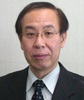
Director, Integrated Support Center for Nuclear Nonproliferation and Nuclear Security (ISCN), JAEA
Master of Nuclear Engineering, Nagoya University
Professional Career:Mr. Mochiji graduated from the Department of Nuclear Engineering, Graduate School of Engineering, at Nagoya University in 1980.
He started his professional career at the Ningyo-toge Works of the Power Reactor and Nuclear Fuel Development Corporation (PNC, former name of JAEA) as a technical staff member engaged in conversion tests of recovered uranium from Tokai Reprocessing Plant. In 1988, he moved to the Policy Planning Division of PNC Headquarters in Tokyo and from there was dispatched to the Ministry of Foreign Affairs, Nuclear Energy Division, United Nations Bureau in 1991, in charge of coordination with IAEA and OECD/NEA on nuclear related issues.
From July 1993 for 2 years, he conducted research and analysis on U.S. nuclear non-proliferation policies and nuclear technologies at the Embassy of Japan in Washington D.C.
After returning to PNC in 1995, Mr. Mochiji's work focused mainly on nuclear non-proliferation issues, including the Guidelines for the Management of Plutonium (INFCIRC/549), international plutonium management, and transparency measures for the peaceful use of nuclear energy (PNC/US DOE Joint Project). He was Deputy Director of the Tokyo Office and Deputy Director of the Nuclear Nonproliferation Science and Technology Center (NPSTC). He worked with the IAEA, as Director of the JAEA Liaison Office in Vienna between 2007 and 2010. From 2010 to present, as Director of the Integrated Support Center for Nuclear Nonproliferation and Nuclear Security (ISCN, formerly NPSTC, STNM), Mr. Mochiji has been actively in charge of a variety of nuclear nonproliferation related issues, including nuclear material management, physical protection of nuclear materials and nuclear non-proliferation technology development. Holding this "The 2016 International Forum on Peaceful Use of Nuclear Energy, Nuclear Non-Proliferation and Nuclear Security" is one of his department's important missions.

Former Director of the Office of Nuclear Security, International Atomic Energy Agency (IAEA)
As Director of the IAEA Office of Nuclear Security from 2003 to 2011, Dr. Nilsson was responsible for developing and establishing the IAEA nuclear security programme. Through consecutive Nuclear Security Plans, the latest for 2010-2013, the IAEA nuclear security programme evolved. Key elements of the IAEA programme were established; the IAEA Nuclear Security Guidance published in a dedicated Nuclear Security Series; broader scope IAEA review services; a wide programme of assistance to strengthen nuclear security in individual countries; dedicated plans (Integrated Nuclear Security Support Plans) for coordination and follow-up; national and regional Nuclear Security Support Centers, also referred to as Centers of Excellence, and a broad programme for training and University education. The IAEA illicit trafficking database programme became the solid reliable source of information regarding trafficking in nuclear and radioactive substances. Before appointed as the IAEA Director of Nuclear Security, Dr. Nilsson served as the Senior Coordinator in the IAEA Department of Safeguards, responsible for the IAEA state evaluation process.
Earlier in Sweden, Dr. Nilsson had various managerial and leadership positions at the Swedish Nuclear Power Inspectorate, including for IAEA safeguards, bilateral nuclear interaction and control and coordination of the Swedish nuclear security support to the Newly Independent States and the Baltic States.
As Medical Doctor and a Master of Science, Anita Nilsson now leads a network of experts for nuclear security, working in bilateral programmes and with non-governmental organizations. Dr. Nilsson is currently a member of the Board of Directors the Swedish ISEC Industrial Security AB, Senior Associate to the Partnership for Global Security, member of the Global Nexus Initiative, Associate Fellow to Chatham House, Policy Advisory and Senior Fellow to the CITS of the University of Georgia, Advisor (nuclear security) to the Federation of American Scientists and an international partner to the FMWG (Fissile Material Working Group).

Executive Secretary, Nuclear Energy Regulatory Agency (BAPETEN), Indonesia
As Executive Secretary of the Indonesian Nuclear Energy Regulatory Agency (BAPETEN), Mr. Haditjahyono has responsibility to develop the management capability of BAPETEN covering the development of professional staff and other resources in order to achieve the BAPETEN's vision and missions as a world class regulatory body. I-CoNSEP (Indonesian Center of Excellent in Nuclear Security and Emergency Preparedness) is one among other strategic activity of BAPETEN.
Earlier (before 2015), he had various managerial and leadership positions at the Indonesian Nuclear Energy Agency (BATAN). The last post was the Director of Education and Training Center of BATAN which organizes many types of training including the IAEA regional school on nuclear security. He acted also as one of steering committee of CSCA (Center for Security Culture and Assessment).
In the regional network he was the chairman of ANENT (Asian Network for Education in Nuclear Technology) in 2011 - 2015, as the Indonesian HRD Project Leader of FNCA (Forum for Nuclear Cooperation in Asia) in 2009 - 2014, and as the Topical Group Education and Training of ANSN

Senior Researcher, Physical Protection Division, Korea Institute of Nuclear Nonproliferation and Control (KINAC)
As a Senior Researcher of Korean Institute of Nuclear Nonproliferation and Control (KINAC) from 2006 until now, Dr. Jang has worked 8 years in physical protection inspection, research and international cooperation of Korea. He was a main organizer of "2012 Seoul Nuclear Security Symposium" and had developed a vulnerability assessment software using the 2-D facility map of nuclear facility.
As an IAEA secretariat from 2013 to 2015, Dr. Jang coordinated the IAEA's research project on Nuclear Security Assessment Methodologies (NUSAM) for nuclear facility, irradiator facility and transport security. He also convened the IAEA nuclear security trainings and workshop as a coordinator and instructor.
Dr. Jang got his phD in the area of quantum information theory in 2005 at the Korea Advanced Institute of Science and Technology (KAIST).

Senior Fellow, Strategy, Planning and Outreach, CBRN Risk Mitigation and Security Governance, United Nations Interregional Crime and Justice Research Institute (UNICRI)
Ms. María Eugenia de los Ángeles Rettori is a Senior Fellow at the United Nations Interregional Crime and Justice Research Institute (UNICRI). Working in the Chemical, Biological, Radiological and Nuclear (CBRN) Risk Mitigation and Security Governance Unit, she focuses on strategic planning and outreach of the European Union CBRN Risk Mitigation Centres of Excellence (CoE) Initiative. The EU CBRN CoE Initiative has been jointly implemented by the European Commission and UNICRI since 2010 and engages more than 58 countries worldwide.
In her current post, Ms. Rettori liaises with both partner countries and donors on strategies for the implementation of CBRN National Action Plans produced within the CBRN CoE Initiative. Ms. Rettori also contributes to the promotion of the CBRN National Action Plans at high-level events such as the United Nations General Assembly, the Global Partnership, and the Meetings of the States Parties to the Biological Weapons Convention and the Chemical Weapons Convention.
Prior to this, Ms. Rettori served as Regional Coordinator for the CBRN CoE Initiative in South East Asia (2010-2015) operating out of Manila, the Philippines. At the CBRN CoE Regional Secretariat she coordinated CBRN activities with the 10 countries of the Association of Southeast Asian Nations (ASEAN), supported the implementation of capacity-building projects in the region and facilitated the preparation of several CBRN National Action Plans. Ms. Rettori also facilitated coordination between the Initiative and international partners operating in the South East Asia region, such as the Biological Weapons Convention (BWC) Implementation Support Unit, the International Atomic Energy Agency (IAEA), Interpol, the Organization for the Prohibition of Chemical Weapons (OPCW), the United Nations Office for Disarmament (UNODA) and the World Health Organization (WHO).
Ms. Rettori is a qualified lawyer and holds a Masters in Law.

Deputy Director, ISCN, JAEA
Mr. Yosuke Naoi is a deputy director of the integrated support center for nuclear nonproliferation and nuclear security which was established in December 2010 in JAEA followed by the Japanese statement at the Nuclear Security Summit, April 2010. He had been involved in the heavy water reactor development project for totally 20 years since 1983. From 1998 to 2000, he was on loan to the Japan Ministry of Foreign Affairs as a technical adviser for North Korean nuclear issue and the KEDO (Korean Peninsula Energy Development Organization) project. He was assigned for the research of the mechanism of assurance of fuel supply based on the contract with Cabinet Assistance Office of GOJ for three years since 2005. From 2010 he was engaged in the preparation for establishment of the integrated support center. Currently he severs as a chairperson of the IAEA International Network for Nuclear Security Training and Support Centers with terms of a year from 2016.
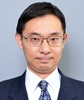
Director, Arms Control and Disarmament Division, Disarmament, Non-Proliferation and Science Department, the Ministry of Foreign Affairs of Japan
March 1993
Bachelor of Law, The University of Tokyo
June 1995LL.M., The University of Michigan Law School
June 1996M.A., The University of Michigan (Political Science)
CareerApril 1993
Joined the Ministry of Foreign Affairs, Government of Japan
August 1998First North America Division, North America Bureau, MOFA
August 2000Human Rights and Humanitarian Affairs Division, MOFA
August 2004Principal Deputy Director, FTA/EPA Division, Economic Affairs Bureau, MOFA
April 2007First Secretary, Permanent Mission of Japan to the United Nations
August 2010Counselor, Embassy of Japan in Egypt
July 2013Cabinet Counselor (National Security and Crisis Management)
August 2015Director, Arms Control and Disarmament Division, MOFA
PublicationsMay 2007
(co-authorship) "Kaisetsu FTA/EPA Koushou" (Handbook for EPA/FTA Negotiations)
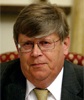
Senior Associate, Harvard Kennedy School / Senior Advisor on Science and Nonproliferation, Foundation for Defense of Democracies / Former Deputy Director General of the IAEA
Dr. Olli Heinonen is a Senior Associate at the Harvard Kennedy School of Government's Belfer Center for Science and International Affairs, and a Senior Advisor on Science and Nonproliferation at the Foundation for Defense of Democracies in Washington, D.C. His research and teachings include: nuclear safety, security, non-proliferation and disarmament, verification of treaty compliance, enhancement of the verification work of international organizations, and transfer and control of peaceful uses of nuclear energy.
Before joining the Belfer Center in September 2010 as a Senior Fellow until 2016, Olli Heinonen served 27 years at the International Atomic Energy Agency in Vienna. Heinonen was the Deputy Director General of the IAEA, and head of its Department of Safeguards. Prior to that, he was Director at the Agency's various Operational Divisions, and as inspector including at the IAEA's overseas office in Tokyo, Japan.
Prior to joining IAEA, he was a Senior Research Officer at the Technical Research Centre of Finland Reactor Laboratory in charge of research and development related to nuclear waste solidification and disposal.
Olli Heinonen studied radiochemistry and completed his PhD dissertation in nuclear material analysis at the University of Helsinki.

Executive Director, Verification Research Training and Information Centre (VERTIC)
Mr. Andreas Persbo is the Executive Director of the London-based Verification Research, Training and Information Centre. He has been working on a range of issues at the centre for more than a decade. His focus has been on on-site inspections, with a particular emphasis on on-site inspections of warhead dismantlement, fissile material controls and monitoring, and CTBT inspection methodology.
Mr. Persbo holds a juris kandidat from Stockholm University, Sweden, as well as a diploma in Nuclear Law from the University of Montpellier I, France. Before VERTIC, Andreas has worked with the British American Security Information Council. Before that, he served at a Swedish District Court. In the early 1990s, he completed two tours of duty as a United Nations Peacekeeper: in Lebanon and Former Yugoslavia.
His latest publications are Persbo, Andreas, 'Verification requirements' in Lodgaard, Sverre, ed. Stable Nuclear Zero: The Vision and Its Implications for Disarmament Policy. S.l.: Routledge, 2016; and Persbo, Andreas and Drobrysz, Sonia, 'Strengthening the IAEA verification capabilities' in Nuclear Weapons: Strengthening the International Legal Regime. Edited by Ida Caracciolo, Marco Pedrazzi and Talitha Vassalli Di Dachenhausen. Utrecht: Eleven International Publishing, 2016.
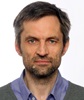
Department Head, Department for Reactor Operations, Institute for Energy Technology, Norway
2016-
Department Head, Department for Reactor Operations, Institute for Energy Technology, Norway
2013-2016Head of Safety / senior researcher, Institute for Energy Technology, Norway
2012-2016Department Head, Department for Safety and Quality Assurance, Institute for Energy Technology, Norway
2009-Associate professor, University of Oslo, SAFE (Safety and Technology)
2001-2011Head of Section, Section for Radiation Application in Industry and Research, Norwegian Radiation Protection Authority
1999Adviser, Norwegian Ministry of Foreign Affairs, Department for Security Policy
1996-1998Guest lecturer, University Courses at Svalbard (Radioactivity in the Arctic)
1995-1998Research scientist, Nuclear Safety Department, Norwegian Radiation Protection Authority
1993Research assistant, Moscow Institute of Physics and Engineering, Russia (two months)
Education:2002-2008
PhD, Institute of Physics, Norwegian University of Science and Technology, (NTNU)
1999-2000Centre for Non-proliferation Studies, Monterey Institute of International Studies (Fulbright scholar)
1998Norwegian Defence Intelligence and Security School (Russian)
1988-1995Norwegian Institute of Technology (NTH), Faculty for physics and mathematics
1990-1991History of ideas, ex.phil, University of Oslo
1987-1988Military service, Norwegian Air Force, Gardermoen

General Manager, Technology Development Promotion Office, ISCN, JAEA
Safeguards office of PNC, which is former organization of JAEA
1989-1998Development of vitrified waste for HALW, mainly to establish the procedure of quality control for vitrified waste that is to be final disposal of high radioactive nuclear wastes.
1998-2000Nuclear material control of Tokai Reprocessing Plant
2000-2002Cost free expert at IAEA, to develop a safeguards measure, which is Near Real Time Accountancy (NRTA)
2002-2004Nuclear material control of Tokai Reprocessing Plant
2004-2008Safeguards inspector, at Ministry of Education, Culture, Sports, Science and Technology
2008-2011Deputy Director of JAEA Washington office
2011-2013Assistant Principal Engineer, Policy research office, Department of Science and Technology of Nuclear Material Management, mainly to research nuclear nonproliferation policy and develop nuclear material accountancy technology for fuel debris at Fukushima Daiichi NPP
2013-2014Deputy General Manager, Technology Development Office, Department of Science and Technology of Nuclear Material Management
2014-presentGeneral Manager, Technology Development Promotion Office, Integrated Support Center for Nuclear nonproliferation and Nuclear security