
Promote Understanding
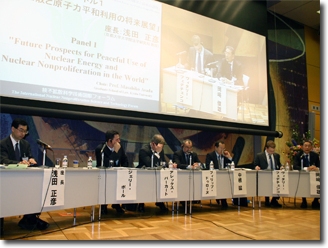
▲ Keynote Speech "Japan's Efforts toward Making the Peaceful Use of Nuclear Energy Compatible with Non-proliferation"
-
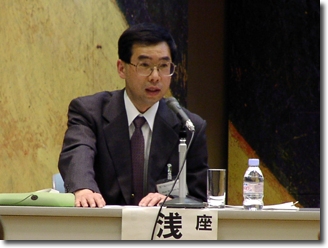
Prof. Masahiko ASADA Graduate School of Law, Kyoto University
-
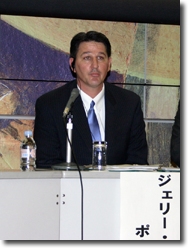
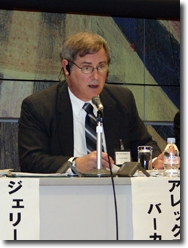
Mr. Jerry PAUL Principal Deputy Administrator, National Nuclear Security Administration (NNSA), US Department of Energy (DOE)
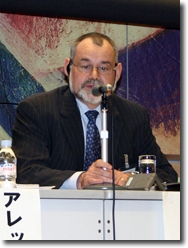
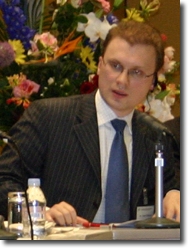
Dr. Alex BURKART Deputy Director, Office of Nuclear Energy, Safety and Security, Bureau of International Security and Nonproliferation, US Department of States (DOS)
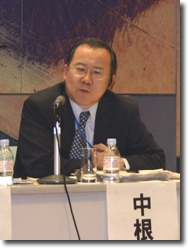
Mr. Takeshi NAKANE Ambassador / Director-General, Disarmament, Nonproliferation and Science Department, Ministry of Foreign Affairs of Japan
Mr. Philippe DELAUNE Deputy Director for International Affairs, French Atomic Energy Commission (CEA)
Mr. Vitaly FEDCHENKO Researcher, Stockholm International Peace Research Institute (SIPRI)
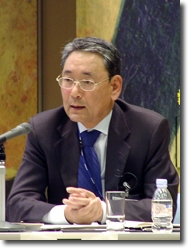
Mr. Toshio OKAZAKI Executive Vice President, JAEA
(Note: This summary is edited by JAEA Nuclear Nonproliferation Science and Technology Center (NPSTC) on its own responsibility and it is not confirmed either by chairperson or panelists. Panelists expressed their views in their private capacity, although they are expressed by their own countries' names as a matter of convenience.)
Currently, the Nuclear Nonproliferation Treaty (NPT) regime is faced with many challenges and new ideas and approaches are needed to strengthen the nonproliferation regime based on the NPT for the peaceful use of nuclear energy. There are three initiatives which currently attract worldwide attention from a nuclear nonproliferation perspective: (1) an assurance of fuel supply mechanism, (2) the US Global Nuclear Energy Partnership (GNEP), and (3) civil nuclear cooperation with India, which is not a member state of NPT. The three initiatives were lively discussed in Panel 1 from various aspects such as their significances, effects, influences, challenges and themes for international cooperation.
-
A Mechanism for assuring the supply of nuclear fuel
At the outset, the currently proposed four mechanisms for assuring fuel supply were introduced and their respective characteristics were briefly described as follows:
-
IAEA Director General Dr. ElBaradei's Multilateral Nuclear Approaches (MNA):
- ‣
- Reliable multilateral fuel supply regime.
-
World Nuclear Association (WNA)'s approach:
- ‣
- The approach would be applied only when market mechanisms have failed. The assurance of supply mechanism was designed as a back up solution.
- ‣
- IAEA would determine a recipient state's eligibility for the mechanism. Recipient states would be judged eligible provided that it forgoes enrichment and reprocessing and abides by international Safeguards.
- ‣
- Recipient states would receive nuclear fuel for commercial contracts under the guidance of supplier states and IAEA.
-
President Bush's nuclear nonproliferation initiative:
- ‣
- This is a short-term mechanism to ensure that states which renounce enrichment and reprocessing can enjoy reliable access to nuclear fuel.
-
US Global Nuclear Energy Partnership:
- ‣
- This has been built on President Bush's initiative with a long-term perspective and envisions a future design for backend measures./dd>
 Impacts on the nuclear nonproliferation regime, especially on the states concerned with nuclear weapon development:
One panelist observed that the assurance of supply mechanisms would not serve as a direct solution and that diplomatic measures should be taken to tackle with the problems posed by those states. Another panelist referred that mechanisms would not work for the case of DPRK, but their backend measures might attract Iran. On the other hand, another panelist mentioned that it would be too early to judge their effectiveness now, since they are not yet designed in detail.
Eligibility for the assurance - to forgo enrichment and reprocessing:
One panelist observed that every state has a right to access sensitive technologies including enrichment and reprocessing and that states must be in good compliance with Safeguards, export control and physical protection obligations under nuclear nonproliferation regime. Some panelists also stated that the mechanism should be elaborately designed to be acceptable by recipient countries.
Classification of "recipient states" and "supplier states":
One panelist asked about the classification of "recipient states" and "supplier states" and said the plan might worsen the inequality between "weapon states" and "non-weapon states" under NPT. In response to the question, another panelist stated that such inequality would be eliminated since nuclear fuel could be accessible to the states which had never received nuclear benefits before. He emphasized the global benefits rather than one single state's benefit.
On the other hand, one panelist suggested that the classification should not be locked up and that the assurance of supply mechanism should be flexible enough to allow "recipient states" to become "supplier states" in the future.
As to inequality under the NPT, one panelist proposed that civilian nuclear facilities in nuclear weapon states should be placed under IAEA Safeguards, in order to mitigate the inequality. He also suggested that the assurance mechanism should be associated with nuclear arms reduction, and that, for example, nuclear material resulted from arms reduction should be utilized for fuel supply so that the assurance mechanism could obtain wider understanding.
-
IAEA Director General Dr. ElBaradei's Multilateral Nuclear Approaches (MNA):
-
Global Nuclear Energy Partnership (GNEP):
 Radioactive waste management:
One panelist said that the recipient states should be responsible for their radioactive waste management, while supplier states should be responsible for the technology development which enables the reduction of environmental burdens. Another panelist, having said that supplier states should be responsible for their wastes now, asserted that the assurance of supply mechanism should be flexible enough both for recipient and supplier states to reconsider their respective responsibilities in view of the situation in the future. Some panelists stated that they should first see how the market would work on the waste management issue and that more discussions would be required, because detailed mechanisms for assuring the supply remain undecided and because there might be some possibilities for other solutions such as disposition in third states.
Reprocessing:
One panelist mentioned that the number of supplier states needs to be increased under certain conditions, since existing reprocessing capacity in supplier states would not be sufficient to reprocess all the spent fuel in the world, in view of the rapid expansion of nuclear energy utilization. Another panelist said that the number of supplier states with commercial reprocessing plant should not be limited while the number of states which promote research and development of minor actinide burning should be limited. In response, one panelist raised objection saying that the number of supplier states engaged in reprocessing should not be increased. As for the minor actinide issue, one panelist asserted that the research and development of minor actinide burning should be conducted step by step.
 Plutonium burning / breeding:
One panelist mentioned that the US and Japan differ on plutonium treatment policy: US is for burning and Japan is for breeding. He stated that the use of burning or breeding would depend on the uranium supply/demand situation and that there was no difference between burning and breeding from the viewpoint of effective utilization of natural resources.
Safeguards:
A US panelist said that enhanced Safeguards is one of seven important elements of GNEP and the advanced Safeguards system is required since minor actinide will be utilized as fuel under GNEP. In this respect, described his expectation of Japan's cooperation in this field. Because Japan is subject to IAEA Safeguards over many years, it enjoys great Safeguards experience and sophisticated Safeguards technology. In response, a Japanese panelist said that Japan has made contributions to Safeguards research and development for reprocessing and plutonium fuel facilities and is ready for further discussions in the enhanced Safeguards of GNEP.
Framework for GNEP discussions:
A US panelist observed that the details of GNEP are still under discussion, and that many countries have showed interest in GNEP, and also that, it would be very important to have frank and lively discussions on GNEP in the international arena, like this Forum.
-
Civil Nuclear Cooperation with India:
First, a US panelist explained the significance of the civil nuclear cooperation with India as follows;
- The cooperation is important in meeting the increasing energy demand in India.
- The US does not recognize India as a "nuclear weapon state" under NPT regime.
- Currently 81% of nuclear facilities in India are not placed under IAEA Safeguards; however, India has agreed to take steps that will bring her into the international nonproliferation mainstream, by placing 90 % of nuclear facilities under IAEA Safeguards in the future.
- India has committed to the IAEA Safeguards additional protocol, nuclear export control, nuclear-test moratorium, and Fissile Material Cut-off Treaty. These commitments would be a great step toward the nuclear nonproliferation mainstream. The cooperation has gained support from IAEA, UK, France and Russia.
A panelist from France, which also announced the civil nuclear cooperation with India last February, explained France's position as follows:
- France supports US cooperation with India.
- France does not recognize India as a "nuclear weapon state" under NPT.
- It is important for India to comply with nuclear nonproliferation obligations and France expects that India should sign and ratify the Comprehensive Nuclear Test Ban Treaty.
On the other hand, one panelist mentioned that he finds it difficult to conclude the pros and cons of the cooperation and that he would like to see the further discussions on implications for the NPT, the Nuclear Suppliers Group's export control guidelines and the details of IAEA Safeguards to be implemented in India.
 Areas for cooperation:
A US panelist explained that reprocessing and enrichment would be outside the scope of US cooperation, and that fast breed reactors would be outside the scope as well because they are not placed under IAEA Safeguards. Consequently, US cooperation would be limited only to light water reactors. A French panelist said that French cooperation would be almost the same as the US's. He also said that nuclear safety cooperation within a multilateral framework should be worth exploring in view of the possible effects of nuclear accidents on the international community, and added that such cooperation could be lent only to Indian nuclear facilities used exclusively for peaceful purposes.
Impacts on the NPT:
One panelist expressed his concern that civil nuclear cooperation with India could violate Article 1 and Article 3 of the NPT. The US panelist disagreed and argued that the cooperation would not violate the NPT at all, illustrating the following advantages to the nuclear nonproliferation regime;
- to help to prevent the diversion of fissile materials for military purpose, because more materials will be placed under Safeguards
- to reduce the amount of fissile material for military use
- to enhance transparency in the use of nuclear materials
A US panelist asserted that India should be the only exception of the Guidelines and Iran and DPRK should not be granted such exceptions. A French panelist said that France would never lend the civil nuclear cooperation to India before the NSG agrees on it. Another panelist pointed out the importance of the US and France not overruling NSG positions.
At the end of the panel, the chairperson summarized the panel as follows;
Assurance of nuclear fuel supply
There are various mechanisms for assuring nuclear fuel supply and following views were expressed by the panelists.
- The mechanisms would not serve as a direct solution for DPRK and Iran, however, they may be useful for the prevention of nuclear nonproliferation in the long term.
- The mechanisms need to be designed so that enrichment and reprocessing technologies are not proliferated.
- They should also be free from any political influences.
- Their proper modalities depend on how supplier states participated in the mechanisms.
GNEP offers nuclear energy benefits to many states which have not enjoyed them yet. Under GNEP supplier states can cooperate with recipient states in the areas of nuclear safety and nonproliferation.
The following opinions were also expressed in the panel.
- Recipient states should have the final responsibility for radioactive waste disposal.
- GNEP requires technologies with proliferation resistance and in this respect, contribution by advanced countries is expected.
- Plutonium treatment - burning or breeding - differs from state to state; however, the purpose - effective use of a natural resource - is the same.
- It is important to discuss GNEP further in the international arena.
It is important to increase the number of Indian nuclear facilities placed under IAEA Safeguards in order to bring India into the nuclear nonproliferation mainstream.
On the other hand, an opposing view was expressed that India should not be exempted from nonproliferation norms as an exception but that India should be treated same as many NPT states which can only enjoy peaceful use of nuclear energy in exchange for abandonment of nuclear weapon development.
▼ Panel 2 "Future Prospects of Nuclear Nonproliferation and Safeguards Technologies"