
Promote Understanding
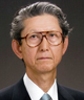
JAEA President
Dr. Atsuyuki Suzuki is the President of the Japan Atomic Energy Agency since 2010. Prior to that, he served the Nuclear Safety Commission of Japan as Chair from 2006 and as full-time member from 2003. Until 2003, he was Professor of Nuclear Engineering at the University of Tokyo, and is now honored with the distinction of Professor Emeritus.
Dr. Suzuki's major scientific areas are nuclear fuel cycle engineering, radioactive waste management and material safeguards, and energy modeling from global perspectives. He managed a number of projects in which he was the project leader or task force chair. For example, at the University, he led a security management project. Internationally, he was co-leader of the joint study on Interim Storage of Spent Nuclear Fuel between Harvard University and the University of Tokyo, and a task-force chair of the Panel Report on Managing the Global Nuclear Materials Threat at Center for Strategic and International Studies, Washington D.C.
In 1978, Dr. Suzuki was selected as the Representative from Japan for the Eisenhower Exchange Fellowship that provides an opportunity to stay in the United States as an honorable guest. For one and a half years, from 1974 to 1975, he worked in Austria for the International Institute for Applied Systems Analysis in the global energy study group as an expert of mathematical modeling and nuclear energy.
In 2005, Dr. Suzuki was appointed by the Prime Minister as a member of the Scientific Council of Japan, and internationally, served the Board of Nuclear and Radiation Studies at the National Academy of Sciences in the United States, 2000-2006. Currently, Dr. Suzuki serves the IAEA as a member of INSAG and the FANR, the nuclear regulatory body of UAE, as a member of international advisory board.
Dr. Suzuki is Fellow of the Atomic Energy Society of Japan, and was a member of the American Nuclear Society, where he used to be Associate Editor in Asia of Nuclear Technology. He holds the PhD degree in nuclear engineering from The University of Tokyo.
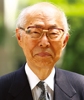
Chancellor, Musashi Academy of Nezu Foundation / Former Minister of State for Science and Technology / Former Minister of Education, Science, Sports and Culture
1953 Mar.
Graduation from University of Tokyo
1956 Mar.Completion of Graduate Course, Dept. of Physics, Univ. of Tokyo
1958 Aug.Dr. of Science from Univ. of Tokyo
Academic Career:1956 Apr.
Research Associate, Institute for Nuclear Studies(INS), Univ. of Tokyo
1959 Sept.Research Associate, Argonne National Laboratory
1960 Sept.Lecturer, Dept. of Physics, Univ. of Tokyo
1964 Aug.Associate Professor, Dept. of Physics, Univ. of Tokyo
1967 Sept.-1968 Jul.Visiting Professor, Rutgers Univ., New Jersey and Princeton Univ.
1971 Jan.-1973 Jan.Professor, State Univ. of New York at Stony Brook
1975 Jun.Professor, Dept. of Physics, Univ. of Tokyo
1981 Apr.Director of Computer Center, Univ. of Tokyo
1981 Sept.-1982 Aug.Director, The Physical Society of Japan
1983 Oct.-1987 Mar.Councilor, Univ. of Tokyo
1985 Apr.-1987 Mar.Dean of Faculty of Science, Univ. of Tokyo
1987 Apr.-1989 Mar.Vice President, Univ. of Tokyo
1989 Apr.-1993 Mar.President, Univ. of Tokyo
1993 Apr.-1993 Sept.Professor, Hosei Univ.
1993 Apr.-1998 MayScientific Counselor, Ministry of Education
1993 MayProfessor Emeritus, Univ. of Tokyo
1993 Oct.-1998 MayPresident, The Institute of Physical and Chemical Research (RIKEN)
1995 Apr.-1998 MayChairman of the Central Council for Education
1996 Nov.-1998 MayMember of the Administrative Reform Council
1996 Dec.-1998 MayDeputy Chairman, Council for Relocation of the Diet and other organizations
1998 Jul.-2004 Jul.House of Councilors member
1998 Jul.-1999 Oct.Minister of Education, Science, Sports and Culture
1999 Jan.-1999 Oct.Minister of State for Science and Technology
2000 June-2012 Mar.Chairman, Japan Science Foundation
2004 Jul.-Director, Science Museum
2006 Apr.-Chancellor, Musashi Academy of Nezu Foundation
2010 Apr.-Chairperson, Shizuoka University of Art and Culture
Awards and Honor:1978 Dec.
Nishina Memorial Prize
1979 Jun.Honorary Doctor, Univ. of Glasgow, U.K.
1987 Dec.Humboldt Award, Germany
1988 Feb.Prize of the Haiku Society
1990 MayWetherill Medal, The Franklin Institute, U.S.A.
1990 Apr.Order Das Grosse Verdienstkreuz, Bonn, Germany
1991 Dec.Kanselarij der Netherlandse. Orden's Gravenhage, Amsterdam
1992 Apr.Honorary Doctor, Drexel Univ., U.S.A.
1992 Nov.Honorary Professor, Univ. of Science and Technology, China
1992 Dec.Honorary Doctor, Chung Yuan Christian Univ., Taiwan
1993 Apr.Bonner Prize, American Physical Society
1993 Jun.The Japan Academy Prize
1994 MayHonorary Doctor, State University of New York at Stony Brook, U.S.A.
1994 Jun.Honorary Doctor, The University of Groningen, the Netherlands
1996 Jul.Honorary Doctor, The University of Birmingham, U.K.
1998 MayHonorary Professor, Peking University, China
1998 Jun.au grade d'officier dans l'ordre national de la Legion d'Honneur, France
1999 Jun.Honorary Doctor, University of Surrey, U.K.
1999 Nov.Honorary Doctor, Weizmann Institute of Science, Israel
1999 Dec.Honorary Doctor, University of Stellenbosch, South Africa
2000 MayHonorary Doctor, The University of Arizona, U.S.A.
2002 Sept.Knight Commander of the British Empire, U.K.
2004 Nov.A person of cultural merits
Grand Cordon of the Order of the Rising Sun
2008 CAS International Science and Technology Cooperation Award (China)
2009 Sept.National Friendship Award (China)
2010 Jan.2009 International S&T cooperation Award (China)
2010 Nov.Order of Culture
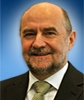
Deputy Director General and Head of the Department of Safeguards, International Atomic Energy Agency (IAEA)
Mr. Herman M.G. Nackaerts was appointed as the Deputy Director General, Head of the Department of Safeguards at the International Atomic Energy Agency, in September 2010.
In January 2006, Mr. Nackaerts joined the International Atomic Energy Agency and was appointed Director of Division of Operations B in the Department of Safeguards.
From 1983-2006, before joining the International Atomic Energy Agency, Mr. Nackaerts assumed positions at the European Commission, in the Section for Euratom Safeguards as: Section Head of Strategy and External Relations; Section Head of Safeguards Inspections; Head of the Division of Logistics and Information Technology and Head of the Division of Safeguards Inspections.
Before 1983 Mr. Nackaerts held positions as a process and design engineer within the Belgian chemical and nuclear industry respectively and as a project engineer at the Nuclear Research Centre in Mol, Belgium.
Mr. Nackaerts holds a degree in electrotechnical and mechanical engineering from the University of Leuven in Belgium. He has written numerous safeguards publications and speaks English, French, German and Dutch fluently.

Assistant Deputy Administrator for Fissile Materials Disposition, Office of Defense Nuclear Nonproliferation, National Nuclear Security Administration (NNSA), U.S. Department of Energy (DOE)
Mr. Peter Hanlon is the Assistant Deputy Administrator for Fissile Materials Disposition (FMD). In this position he oversees the U.S. effort to dispose of surplus highly enriched uranium by downblending it to low enriched uranium fuel for use in commercial reactors, and the U.S. and Russian effort to dispose of 68 metric tons of surplus weapon-grade plutonium, including the construction of the MOX Fuel Fabrication Facility and Waste Solidification Building at the Savannah River Site to support the plutonium disposition mission in the U.S. Mr. Hanlon joined NNSA as a civil servant in 2010. Prior to joining NNSA, Mr. Hanlon served in the U.S. Navy, retiring as a Captain. During his 25 year career, he served on a variety of nuclear powered submarines, culminating in his command of the USS LOUISIANA (SSBN-743). Ashore, he served in policy positions within the Departments of Defense and Energy serving as the Military Assistant to the Assistant Secretary of Defense for International Security Policy and Executive Staff Director of the National Nuclear Security Administration. In this position, Mr. Hanlon directly supported the NNSA Administrator in managing the Nation's Nuclear Security Enterprise.
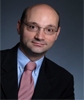
Director for International Relations, Strategy and External Relations Sector, French Atomic Energy and Alternative Energies Commission (CEA)
-
1989 Baccalauréat grade "A" in mathematics and physics (specialising in mathematics)
-
- Preparatory class in literature (Hypokhagne and Kagne), Lycee Henri IV Paris (1989-1992).
Ecole Normale Supérieure, Rue d'Ulm, Paris.
Bachelors degree (1992) and Masters (1993) degree in Modern Languages, University of Paris IV Sorbonne.
- Paris Institute for Political Studies (public service section : 1992-1994).
- National Service (1995) - Combat unit Leader.
- Ecole Nationale d'Administration (1996-1998, 'Valmy' year).
-
Ministry of Foreign Affairs
North Africa and Middle East Department (1998-2000)
Middle East sub department, entrusted with Iran/Iraq matters.
Strategic Affairs, Security and Disarmament Department (2000-2002)
Disarmament and Nuclear Non-Proliferation sub department, entrusted with monitoring nuclear proliferation issues
(Iran, Middle East, North Korea, India/Pakistan, CTBT).
US State Department in Washington DC (2002-2003) : Desk Officer (EUR)
Counsellor, French Embassy, Washington DC (2003-2005).
Prime Minister's Office: Advisor for Defence and Strategic Affairs (June 2005-May 2007).
Ministry of Defence: Diplomatic Advisor to the Minister (May 2007 - September 2009)
Since September 2009 : French Atomic Commission, Director for International Relations and Governor of France to IAEA
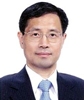
Ambassador for Energy & Resources, Ministry of Foreign Affairs and Trade (MOFAT), Republic of Korea
Feb. 1980
B.A. in the Department of International Relations,
Seoul National University, Seoul, Korea
Diploma in the Department of International Relations,
London School of Economics and Political Science, UK
Ph.D. (History) in Diplomatic Academy, Russia
CareerMay 1979
Passed High Diplomatic Service Examination
Apr. 1980Joined the Ministry of Foreign Affairs (MOFA)
Jul. 1984Korean Embassy to the Swiss Confederation
Jan. 1991 - Jan. 1995Korean Embassy to the Russian Federation, Uzbekistan
Feb. 1995Principal Secretary to the Minister, MOFA
Aug. 1996Director, North America Division II and III, MOFA
Jun. 1997Korean Embassy to the United States of America
Jun. 2000Korean Embassy to the Union of Myanmar
Nov. 2002Deputy Spokesman and Deputy Director-General of North American Affairs Bureau, MOFAT
Apr. 2003Principal Director, National Security Council
Mar. 2004Assistant to Foreign Minister, MOFAT
Mar. 2006Director-General, European Affairs Bureau, MOFAT
Feb. 2007Policy Research, Georgetown University, USA
May 2008Ambassador to Ukraine, Georgia and Moldova
Mar. 2011 -Chief Negotiator for Korea/US nuclear cooperation agreement
Sep. 2011Professor, Institute of Foreign Affairs and National Security, MOFAT
Jun. 2012 -Ambassador for Energy and Resources
Publications1994
"Economic Relations between Korea and Russia in the 19th Century"
2008"Perspectives on International Relations"
AwardService Merit Medal
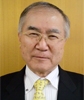
President, Japan Atomic Energy Relations Organization / President, Institute of Nuclear Materials Management (INMM), Japan Chapter / Advisor of Chubu Electric Power Co., Inc.
Mr. Takahiko ITO graduated from the Department of Electronic Engineering, the Faculty of Engineering, the University of Tokyo in 1964, and joined Chubu Electric Power Co. He worked mostly in the field of nuclear power in Chubu Electric Power Co. In 1993, he was appointed as Senior General Manager of Hamaoka Nuclear Power Station and Board Director and General Manager of Hamaoka Central Administration Office in 1997. He was appointed as Managing Director in 2001, Division Manager of Power Generation Division in 2003 and an Executive Vice President in 2005. Since January 2007, he was one of five Commissioners of Japan Atomic Energy Commission until January 2010. He has been the Advisor of Chubu Electric Power Co. since 2007. He has been the President of Japan Atomic Energy Relations Organization, the President of INMM Japan chapter since 2010.

Director, International Programs Office, Office of Fissile Materials Disposition, National Nuclear Security Administration (NNSA), U.S. Department of Energy (DOE)
Mr. Guy Douglas Lunsford serves as the Director of International Programs, Office of Fissile Materials Disposition, within the National Nuclear Security Administration's (NNSA) Office of Defense Nuclear Nonproliferation. In his current position he leads the NNSA's efforts in implementing the U.S./Russian Plutonium Management and Disposition Agreement (PMDA) and negotiations with the International Atomic Energy Agency (IAEA) on the development of an international verification agreement to confirm the disposition of surplus weapons plutonium in the U.S. and Russian under the PMDA.
In 2004 he directed the U.S. MOX fuel lead assembly program which called for the conversion of excess U.S. nuclear weapons to plutonium oxide, shipment of the oxide to France for fabrication into MOX fuel assemblies, and return to the U.S. for irradiation in a U.S. light water reactor.
Mr. Lunsford began his professional career in the Unites States Air Force as an Intercontinental Ballistic Missile Flight Commander for the Minuteman III strategic missile system. Prior to retiring as a Colonel after 26 years of service, he represented the Department of State in Geneva on START I implementation; chaired a G-8 Subcommittee on Plutonium Disposition; and represented the Department of Defense on delegations dealing with FMCT, CTBT, NPT, the Strategic Transparency Initiative, the U.S./Russian Plutonium Production Reactor Agreement, the Mutual Reciprocal Inspection Initiative and a number of U.S./Russia Cooperative Threat Reduction Programs.
Mr. Lunsford is a graduate of the U.S. Naval War College with a Master Degree National Security and Strategic Studies.
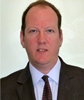
Section Head, Coordination and Support Section, Division of Operations A, Department of Safeguards, IAEA
Dr. Peter J.W. Rance is Head of the Section for Coordination and Support in the Operations Division A, of the International Atomic Energy Agency's Department of Safeguards. Dr. Rance joined the IAEA in 2006 and has worked in areas relating to safeguards implementation in East Asia and Oceania for 6 years as well as contributing to the wider work of the Department.
Prior to joining the IAEA, Dr. Rance worked in the British nuclear industry for 16 years holding a series of increasingly senior positions relating to spent fuel management, in particular reprocessing and interim storage of irradiated fuels and plutonium. During this period he served as a consultant to the UK Government, the IAEA and served as a member of several OECD Nuclear Energy Agency Working Groups relating to reprocessing and spent fuel management.
Dr. Rance is a chemist by professional training having a PhD from the University of Cambridge in photochemical induced charge transfer; he is married with three teenage children.

Director and Senior Fellow, Proliferation Prevention Program, Center for Strategic and International Studies (CSIS)
Ms. Squassoni serves as director and senior fellow of the Proliferation Prevention Program at CSIS. Prior to joining CSIS, Ms. Squassoni was a senior associate in the Nuclear Nonproliferation Program at the Carnegie Endowment for International Peace. From 2002-2007, Ms. Squassoni advised Congress as a senior specialist in weapons of mass destruction at the Congressional Research Service, Library of Congress. Before joining CRS, she worked briefly as a reporter in the Washington bureau of Newsweek magazine. Ms. Squassoni also served in the executive branch of government from 1992 to 2001. Her last position was Director of Policy Coordination for the Nonproliferation Bureau at the State Department. She also served as a policy planner for the Political-Military Bureau at State. She began her career in the government as a nuclear safeguards expert in the Arms Control and Disarmament Agency. She is the recipient of various service awards and has published widely. She is a frequent commentator for U.S. and international media outlets.
Ms. Squassoni received her B.A. in political science from the State University of New York at Albany, a Masters in Public Management from the University of Maryland, and a Masters in National Security Strategy from the National War College.
Reference: http://csis.org/expert/sharon-squassoni
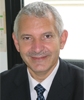
Nuclear Counsellor at the Embassy of France in Japan
Mr. Christophe Xerri has been assigned as Nuclear Counsellor at the Embassy of France in Japan since December 1st, 2011.
After graduating from Ecole Centrale de Lyon (Engineering - 1984) and Salford University (UK - Master of Science - 1984) and Institut Supérieur des Affaires (MBA - 1988), Christophe Xerri started his career in a Japanese bank in Tokyo.
He then joined AREVA Group in 1991, where he got involved in the promotion of nuclear fuel recycling, in the implementation of the first return of reprocessing residues to Japan, then in investments in uranium mining and in innovation and technological developments (including joint programs with CEA).
In 2000, he moved to the field of International Relations and Non-Proliferation, acted as expert to the IAEA and chaired a European expert working group on Safeguards implementation. This position included interaction with the International Directorate of CEA and with the Ministry of Foreign Affairs.
From 2003 to 2007, he was appointed personal assistant to the CEO of AREVA for international affairs.
He moved to Tokyo in 2007 to join AREVA Japan as Managing Director - Marketing and Industrial Strategy. In this position, he was involved in developing relationship with MHI and in the creation of the MNF Joint-Venture. He was then seconded by AREVA to the position of Director and Senior Executive Vice President of Mitsubishi Nuclear Fuel (MNF), a joint-venture created in Japan in 2009 between AREVA, and Mitsubishi Heavy Industries (MHI) in the field of nuclear fuel design and fabrication.
Chair of the Taskforce, the Japan Institute of International Affairs (JIIA)
The University of Tokyo, Faculty of Law
Career Experience:1958
Joined Ministry of Foreign Affairs
1958-60Studies at DePauw University and Princeton University (USA)
1967-71Second and First Secretary, Embassy of Japan in the United Kingdom (UK)
1973-75Director, South-West Asia Division, Asian Affairs Bureau, Ministry of Foreign Affairs
1975-77Director, Korea Division, Asian Affairs Bureau, Ministry of Foreign Affairs
1977-79Counselor, Embassy of Japan in the UK (Research Associate, International Institute for Strategic Studies)
1979-81Minister, Embassy of Japan in Mexico
1981-85Deputy Director-General, United Nations Bureau, Ministry of Foreign Affairs
1985-87Consul-General of Japan in Honolulu, Hawaii(USA)
1987-89Director-General for Scientific and Technological Affairs, Ministry of Foreign Affairs
1989.7-1992.3Governor, Board of Governors, International Atomic Energy Agency (1989.10-1990.10 Chairman, Board of Governors)
1989.11-1992.3Ambassador Extraordinary and Plenipotentiary, Permanent Mission of Japan to the International Organizations in Vienna(Austria)
1992.5-1992.12Ambassador Extraordinary and Plenipotentiary, in charge of Assistance to former Soviet Union
1993.3-1993.8Ambassador Extraordinary and Plenipotentiary, in charge of Japan-North Korea Normalization Talks and Asia-Pacific Economic Cooperation(APEC)
1994.12Ambassador in charge of Korean Peninsula Energy Development Organization(KEDO)
1996.1Ambassador Extraordinary and Plenipotentiary, Embassy of Japan in New Zealand
1998.1Commissioner, Atomic Energy Commission
2001.1Vice-chairman, Atomic Energy Commission
2004.1-2005.3Special Assistant to the Minister for Foreign Affairs
2006-Adjunct Senior Fellow, The Japan Institute of International Affairs(JIIA)
2011-Visiting Professor, Hitotsubashi University
Director, Department of Science and Technology for Nuclear Material Management (STNM), JAEA
Master of Nuclear Engineering, Nagoya University
Professional CareerMr. Mochiji graduated from the Department of Nuclear Engineering, Graduate School of Engineering, at Nagoya University in 1980.
He started his professional career at the Ningyo-toge Works of the Power Reactor and Nuclear Fuel Development Corporation (PNC, former name of JAEA) as a technical staff member engaged in conversion tests of recovered uranium from Tokai Reprocessing Plant. In 1988, he moved to the Policy Planning Division of PNC Headquarters in Tokyo and from there was dispatched to the Ministry of Foreign Affairs, Nuclear Energy Division, United Nations Bureau in 1991, in charge of coordination with IAEA and OECD/NEA on nuclear related issues.
From July 1993 for 2 years, he conducted research and analysis on U.S. nuclear non-proliferation policies and nuclear technologies at the Embassy of Japan in Washington D.C.
After returning to PNC in 1995, Mr. Mochiji's work focused mainly on nuclear non-proliferation issues, including the Guidelines for the Management of Plutonium (INFCIRC/549), international plutonium management, and transparency measures for the peaceful use of nuclear energy (PNC/US DOE Joint Project). He was Deputy Director of the Tokyo Office and Deputy Director of the Nuclear Nonproliferation Science and Technology Center (NPSTC). He worked with the IAEA, as Director of the JAEA Liaison Office in Vienna between 2007 and 2010. From 2010 to present, as Director of the Department of Science and Technology for Nuclear Material Management (STNM, formerly NPSTC), Mr. Mochiji has been actively in charge of a variety of nuclear nonproliferation related issues, including nuclear material management, physical protection of nuclear materials and nuclear non-proliferation technology development. Holding this "2011 International Forum on Peaceful Use of Nuclear Energy and Nuclear Security" is one of his department's important missions.
Deputy Director, JAEA/STNM / Professor (appointed), Nuclear Non-Proliferation Research Laboratory, Department of Nuclear Engineering and Management, School of Engineering, The University of Tokyo
Dr. Yusuke Kuno had worked for the Tokai Reprocessing Plant of the Power Reactor and Nuclear Fuel Development Corporation (PNC) for 20 years, particularly in the area of development of Safeguards verification measurement techniques and accountancy analysis, in cooperation with Los Alamos, Lawrence Livermore, Oak Ridge National Laboratories and IAEA. He was dispatched to Harwell Laboratory and Dounreay Nuclear Power Development Establishment of UKAEA as a researcher in 1986/87. He led the Analytical Laboratory of the Tokai Reprocessing Plant from 1993 to 1999 as General Manager.
He was appointed the Head of Safeguards Analytical Laboratory (SAL) of the IAEA in Seibersdorf Austria in 1999, and had led the IAEA laboratory staff members in the nuclear verification measurement and environmental sampling programs of Safeguards for seven years, by which he got involved in the verification activities of Iraq and Iran issues.
His present position is Deputy Director and Prime Scientist, STNM of JAEA, in which he leads development of Safeguards and other non-proliferation technologies, such as proliferation resistance and transparency for future nuclear fuel cycle. He also promotes education and research on nuclear non-proliferation and security in the Graduate School of The University of Tokyo. He is the vice chairman of the Committee on Nuclear Non-Proliferation, Safeguards and Security, Atomic Energy Society of Japan. He received the PhD in nuclear chemistry from The University of Tokyo.

Commercial Director, JSC International Uranium Enrichment Center (IUEC), Russia
-
1989-1996: Moscow State Technical University, Russia. Special subject: Mechanical Engineer for Machinery Building.
2002-2005: Advanced Training: Ministry for Foreign Trade of the Russian Federation. Special subject: Specialist for Foreign Trade.
-
1997-2002: Moscow State Technical University, Russia. Laboratory for Computer-Aided Design.
In 2002 started working with Minatom (Rosatom).
In 2002-2009: JSC "Techsnabexport" (TENEX; www.tenex.ru). Positions - Expert, Senior Expert, Senior Project Manager, Director of the Finance & Economy Department at the Directorate for Production, Adviser to the Deputy Director General, International Project Management Department.
Responsibilities: Project Management Investments (PMI); development of nuclear energy for peaceful use; safeguards implementation; evolution of non-proliferation regime.
From 2009 till the present time: (JSC) "International Uranium Enrichment Centre" (IUEC; www.iuec.ru). Current position: Commercial Director
- Commercial aspects of the Company's activity;
- Development of the corporate structure by means of new participants joining from the IAEA and NPT member-states;
- Implementation of certain commercial and technical aspects of the Agreement between the government of the Russian Federation and the IAEA regarding the establishment on the territory of the Russian Federation of a physical reserve of low enriched uranium and the supply of low enriched uranium therefrom to the IAEA for its member states;
- Coordination of work with the International Atomic Energy Agency (IAEA), responsibilities for the implementation of IAEA safeguards to the materials located at the IUEC storage facility including guaranteed physical reserve of low enriched uranium;
- Developing and promoting of non-proliferation regime.
Research Coordinator, Global Nuclear Future Project, American Academy of Arts and Sciences
-
Assistant to the Director, Argonne National Laboratory (2001-2012)
-
Actively engaged in several international projects on the economics of nuclear energy as well as a key study on the economics of small modular reactors and supporting studies for the U.S. Department of Energy's international Framework for Nuclear Energy Cooperation (INFEC).
-
At OMB, he helped complete several major nonproliferation agreements including an agreement where the United States would purchase high enriched uranium from Russia to use as nuclear fuel in its power plants.
-
Responsible for detailed policy analysis and novel financing proposals. Advised the Director on pending policy and legislative issues.
-
MBA (managerial economics) from George Washington University in 1979
Engineer's degree (nuclear engineering) from MIT in 1971
Bachelor of Science degree (chemistry and mathematics) from Tufts University in 1968
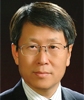
The Seoul National University College of Engineering, Republic of Korea
-
academic career
-
- 1971. 3 - 1975. 2 : Seoul National University, B.S. in Nuclear Engineering
- 1975. 3 - 1977. 2 : KAIST, M.S. in Mechanical Engineering
- 1982. 2 - 1987. 6 : M. I. T. Ph.D. in Nuclear Materials Engineering
-
professional career
-
- Advisor, Korea Patent and Invention association
- Co-Chair, Forum on Climate Change and Energy Policy
- Director, SNU Nuclear Transmutation Energy Research Center
- Director, Nuclear Power Performance Research Center, ESRI
-
field of expertise
- J.H.Kim, I.S.Hwang, R.L.Tobler, Fracture mechanics behavior of a Ni-Fe superalloy sheath for superconducting fusion magnets Part 2: Magnet life analysis model, Fusion Engineering and Design, 36 , pp.269-279, Elsevier Science Sa Lausanne, 1997,- 발행 (No. Related Records: 7, No. cited references: 10)
- R.L.Tobler, I.S.Hwang, M.M.Steeves, Fracture mechanics behavior of a Ni-Fe superalloy sheath for superconducting fusion magnets Part 1, Fusion Engineering and Design, 36 , pp.258-268, Elsevier Science Sa Lausanne, 1997,- 발행 (No. Related Records: 7, No. cited references: 20)
- J.H.Kim, I.S.Hwang, Crack shape evolution of surface flaws under fatigue loading austenitic pipes, Nuclear Engineering and Design, 174 , pp.17-24, Elsevier Science Sa Lausanne, 1997,- 발행 (No. Related Records: 8, No. cited references: 12)
- Hwang-IS, Park-IG, Control of Alkaline Stress-Corrosion Cracking in Pressurized-Water Reactor Steam-Generator Tubing, Corrosion, 55(6), pp.616-625, Natl Assn Corrosion Eng, 2000, 1999-00 발행 (No. Related Records: 0, No. cited references: 17)
- Na Young Lee, Il Soon Hwang and Han-Ill Yoo , New leak detection technique using ceramic humidity sensor for water reactors , Nuclear Engineering and Design, El savier, 2001
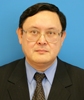
Chairman of the Agency for Atomic Energy, Republic of Kazakhstan
Dr. Zhantikin graduated from the Novosibirsk State University, Russia (Soviet Union at that time), Physical Faculty in 1976.
From 1976 to 1992 he worked in the Institute of Nuclear Physics of the Academy of Sciences of Kazakhstan as a scientific researcher. Field of interest was radiation effects in solids. In 1987 he was awarded a title of Candidate of Physical and Mathematical Sciences (Ph.D.) for thesis on Mossbauer spectroscopy and neutron diffraction investigations of radiation effects in Fe and Ni alloys and inter-metallic compounds.
In 1992 he was invited to the Atomic Energy Agency of the Republic of Kazakhstan as the Head of Scientific and Technical Division. Later he was a Deputy Director, Director General of the Agency, and, after reforming it to the Atomic Energy Committee, a Chairman of the Committee.
In 2012 he was appointed as a Chairman of the newly established Atomic Energy Agency of the Republic of Kazakhstan. The Agency has a regulatory body - Inspectorate - in the field of peaceful uses of atomic energy responsible for nuclear safety and security, radiation protection and nuclear non-proliferation regime in the Republic of Kazakhstan. Also, the Agency is responsible for coordination and supervision of development programs in nuclear sector.
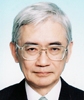
Professor, Department of Nuclear Engineering and Management, School of Engineering, The University of Tokyo
Professor, Department of Nuclear Engineering and Management, School of Engineering, The University of Tokyo
Academic record:
Bachelor of Engineering (1972), Department of Nuclear Engineering, Faculty of Engineering, The University of Tokyo
Master of Engineering (1974), Department of Nuclear Engineering, Faculty of Engineering, The University of Tokyo
Doctor of Engineering (1977), Department of Nuclear Engineering, Faculty of Engineering, The University of Tokyo
Research Associate (December 1977-September 1981), Department of Nuclear Engineering, Faculty of Engineering, The University of Tokyo
Associate Professor (October1981-January1994), Nuclear Engineering Research Laboratory, Faculty of Engineering, The University of Tokyo
Professor (February 1994-March 2008), Department of Quantum Engineering and Systems Science, School of Engineering, The University of Tokyo
Professor (April 2008-), Department of Nuclear Engineering and Management
Nuclear Fuel Cycle, Radioactive Waste Management, Nuclear Energy and Society, Fusion Technology, Nuclear Nonproliferation Technology
He served as President of Atomic Energy Society of Japan in 2011
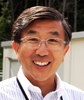
Deputy Director, Integrated Support Center for Nuclear Nonproliferation and Nuclear Security (ISCN), JAEA
Mr. Yosuke Naoi is a deputy director of the integrated support center for nuclear nonproliferation and nuclear security which was established in December 2010 in JAEA followed by the Japanese statement at the Nuclear Security Summit, April 2010. He had been involved in the heavy water reactor development project for totally 20 years since 1983. From 1998 to 2000, he was on loan to the Japan Ministry of Foreign Affairs as a technical adviser for the KEDO (Korean Peninsula Energy Development Organization) project. He was assigned for the research of the mechanism of assurance of fuel supply based on the contract with Cabinet Assistance Office of GOJ for three years since 2005. From 2010 he was engaged in the preparation for establishment of the integrated support center.