
理解増進

日本原子力研究開発機構 副理事長
昭和60年3月
名古屋大学工学部原子核工学科卒業
『職歴』平成8年4月
外務省在ロシア日本国大使館一等書記官
平成12年6月科学技術庁原子力局政策課立地地域対策室長
平成18年1月独立行政法人理化学研究所次世代スーパーコンピュータ開発実施本部企画調整グループグループディレクター
平成19年9月文部科学省研究振興局研究環境・産業連携課長
平成21年7月同省研究開発局原子力計画課長
平成22年4月同省研究開発局環境エネルギー課長
平成24年4月同省研究開発局開発企画課長(併)内閣官房内閣参事官
平成26年1月同省大臣官房政策課長
平成27年1月同省大臣官房審議官(研究開発局担当)
(併)内閣府大臣官房審議官
国立研究開発法人日本原子力研究開発機構 副理事長

米国エネルギー省国家核安全保障庁(DOE/NNSA)防衛核不拡散局担当次官補
Ms. Anne Harrington was sworn in as Deputy Administrator for Defense Nuclear Nonproliferation for the National Nuclear Security Administration in October 2010. Previously, Ms. Harrington was the Director of the U.S. National Academy of Sciences Committee on International Security and Arms Control (CISAC) a position she held from March 2005 to October 2010. While at CISAC, she managed several key studies on a variety of nonproliferation, threat reduction and other nuclear security issues, including: Global Security Engagement: A New Model for Cooperative Threat Reduction (2009); Future of the Nuclear Security Environment in 2015 (2009); Internationalization of the Nuclear Fuel Cycle: Goals, Strategies, and Challenges (2008, joint report with Russian Academy of Sciences); and English-Chinese Chinese-English Nuclear Security Glossary (2008, produced jointly with the Chinese Scientists Group for Arms Control).
Ms. Harrington served for 15 years in the U.S. Department of State, where she was Acting Director and Deputy Director of the Office of Proliferation Threat Reduction and a senior U.S. government expert on nonproliferation and cooperative threat reduction. She has dedicated much of her government career to developing policy and implementing programs aimed at preventing the proliferation of WMD and missile expertise in Russia and Eurasia, and also launched similar efforts Iraq and Libya.
Her State Department assignments include serving as the U.S. senior coordinator for efforts to redirect former Soviet WMD/missile experts 1993-1998. She was based in Moscow from 1991 to 1993, where she was the Senior Advisor to the U.S. Delegation to the International Science and Technology Center (ISTC) Preparatory Committee and Science Analyst at the U.S. Embassy in Moscow. She was instrumental in negotiating the agreements that established the ISTC and the Science and Technology Center in Ukraine (STCU), and the agreement between the United States and Kazakhstan for the secure storage of spent fuel and safe shutdown of the Aktau BN-350 breeder reactor.
She was selected to attend the National Defense University's National War College in 2002-2003, where she was also a research fellow and authored the paper, "Reducing the Threat from Biological Weapons: Perspectives on U.S. Policy." Ms. Harrington has been author or co-author on a number of papers on countering biological threats.
Ms. Harrington graduated with a bachelor's of arts degree from St. Lawrence University, an M.A. from the University of Michigan, and an M.S. from the National Defense University National War College. She has two children, Meredith and Owen Lynch.
出典:http://nnsa.energy.gov/aboutus/ourleadership/harringtonbio
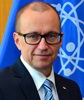
国際原子力機関(IAEA)保障措置担当事務次長
Mr. Tero Varjoranta assumed the post of Deputy Director General and Head of the Department of Safeguards on 1 October 2013.
Prior to this, he was the Director General of the Radiation and Nuclear Safety Authority, STUK, in Finland. Between 2010 and 2012, Mr. Varjoranta served as a Director in the IAEA Department of Nuclear Energy, having previously worked as Division Manager in the International Science and Technology Centre in Moscow.
Mr. Varjoranta has served as President of ESARDA, President of the European Nuclear Regulators Group (ENSREG) and as a member of SAGSI for seven years. He is a physicist by education (MSc and PhL) from Helsinki University.
出典:https://www.iaea.org/about/organizational-structure/department-of-safeguards/deputy-director-general

内閣府原子力委員会委員
昭和20年秋田県生まれ、42年、東京大学法学部中退後外務省入省、44年、米国アマースト大学卒、その後、ハーバード大学国際問題研究所フェロー、外務省軍備管理・科学審議官、在ウィーン国際機関日本政府代表部、在サウジアラビア大使、在スイス大使、軍縮担当国連事務次長を歴任。委員就任まで日本国際問題研究所軍縮・不拡散促進センター所長。平成26年から現職。
この他、現在、国連大学理事会理事、アジア太平洋核不拡散・核軍縮指導者ネットワーク(APLN)委員、同志社大学グローバル・スタディーズ研究科客員教授も務める。
国際戦略問題研究所会員。

日本原子力研究開発機構 核不拡散・核セキュリティ総合支援センター長
1980年名古屋大学大学院工学研究科原子核工学専攻修士課程修了、同年動力炉・核燃料開発事業団に入社し、再処理回収ウラン転換試験に従事。1988年より企画部勤務後、1991年外務省国際連合局原子力課に出向し、IAEA保障措置、OECD/NEA関係業務を担当、その後1993〜1995年、在米国日本大使館科学班にて専門調査員として米国の核不拡散情勢の調査・分析に従事。帰国後、Puの国際管理、透明性向上など、核不拡散業務に従事した後、東京事務所次長、核不拡散科学技術センター次長を経て、2007年より3年間、ウィーン事務所長に就任。2010年帰国後、核物質管理科学技術推進部(旧核不拡散科学技術センター)長を経て、現在、核不拡散・核セキュリティ総合支援センターのセンター長として核不拡散政策、技術開発、人材育成等、核不拡散・核セキュリティ業務を推進。

元IAEA核セキュリティ部長
As Director of the IAEA Office of Nuclear Security from 2003 to 2011, Dr. Nilsson was responsible for developing and establishing the IAEA nuclear security programme. Through consecutive Nuclear Security Plans, the latest for 2010-2013, the IAEA nuclear security programme evolved. Key elements of the IAEA programme were established; the IAEA Nuclear Security Guidance published in a dedicated Nuclear Security Series; broader scope IAEA review services; a wide programme of assistance to strengthen nuclear security in individual countries; dedicated plans (Integrated Nuclear Security Support Plans) for coordination and follow-up; national and regional Nuclear Security Support Centers, also referred to as Centers of Excellence, and a broad programme for training and University education. The IAEA illicit trafficking database programme became the solid reliable source of information regarding trafficking in nuclear and radioactive substances. Before appointed as the IAEA Director of Nuclear Security, Dr. Nilsson served as the Senior Coordinator in the IAEA Department of Safeguards, responsible for the IAEA state evaluation process.
Earlier in Sweden, Dr. Nilsson had various managerial and leadership positions at the Swedish Nuclear Power Inspectorate, including for IAEA safeguards, bilateral nuclear interaction and control and coordination of the Swedish nuclear security support to the Newly Independent States and the Baltic States.
As Medical Doctor and a Master of Science, Anita Nilsson now leads a network of experts for nuclear security, working in bilateral programmes and with non-governmental organizations. Dr. Nilsson is currently a member of the Board of Directors the Swedish ISEC Industrial Security AB, Senior Associate to the Partnership for Global Security, member of the Global Nexus Initiative, Associate Fellow to Chatham House, Policy Advisory and Senior Fellow to the CITS of the University of Georgia, Advisor (nuclear security) to the Federation of American Scientists and an international partner to the FMWG (Fissile Material Working Group).

元IAEAデンマーク政府代表部大使
Education:
Master's Degree in Law and Bachelor's Degree in Roman languages (specialising in Spanish) from Copenhagen University 1974 and 1970 respectively.
Career in the Diplomatic Service of Denmark 1974-2011:
Adviser on International Law and EU Law, Permanent Undersecretary for Administration, Consular Affairs, Protocol and Information
Ambassadorial postings: Ambassador and Permanent Representative of Denmark to the IAEA, OSCE and CTBTO in Vienna (2005-2011)
Ambassador to the Netherlands and Permanent Representative to the OPCW in The Hague (2001-2005)
Ambassador to Spain (1994-2001)
Ambassador to Venezuela (1989-91)
Academic Career
Teacher on International Law, EU Law and Human Rights Law at Copenhagen University, Co-author of the text book on International Law used at Copenhagen University, 1989.
Currently working as an independent Adviser on International political and legal issues, with special focus on nuclear security, inter alia involved as one of the authors of a Draft International Convention on Nuclear Security, 2014, and in a number of international meetings about nuclear security.

韓国アサン政策研究所グローバルガバナンスセンター長
Dr. PARK Jiyoung is a senior research fellow in Science and Technology Policy Program and the director of the Center for Global Governance at the Asan Institute for Policy Studies. Previously, she was a research fellow and managing director of the R&D Feasibility Analysis Center at the Korea Institute of S&T Evaluation and Planning (KISTEP) and also a visiting research scientist at the Center for Innovation at the University of Maryland. Dr. Park's research focuses on the study of policy and management issues for nuclear technology, R&D for global green growth policies, economic analysis of R&D programs, and developing support for the formulation of evidence-based policies in the science and technology fields. Her recent publications include, "Assessment System for Feasibility Analysis of National R&D Programs: The case of Korea," International Journal of Innovation and Technology Management (2011). Dr. Park received her B.S. and M.S. in nuclear engineering and an M.S. in public policy from Seoul National University and her Ph.D. in nuclear engineering and radiological sciences from the University of Michigan.
Academic Background
M.S. in Policy Science, Seoul National University (2009)
Ph.D. in Nuclear Engineering & Radiological Sciences, University of Michigan (1999)
M.S. in Nuclear Engineering & Radiological Sciences, Seoul National University (1993)
B.S. in Nuclear Engineering & Radiological Sciences, Seoul National University (1991)
Professional Background
Visiting Research Scientist, Center for Innovation, University of Maryland, USA (2009∼2010)
Managing Director, R&D Feasibility Analysis Center, KISTEP, Seoul, Korea (2006∼2009)
Research Fellow, KISTEP, Seoul, Korea (2000∼2012)
Researcher, Catholic Research Institutes of Medical Science, Soeul, Korea (2000)

文部科学省 研究開発局 核不拡散科学技術推進室長
1990年早稲田大学法学部卒業後、旧動力炉・核燃料開発事業団(現日本原子力研究開発機構)に入社、高速増殖炉もんじゅ、財務部、業務部での勤務を経て、1997年9月から1999年9月までOECD/NEA法規課に派遣。その後、日本原子力研究開発機構において、原子力研究開発国際協力、核不拡散政策研究等の業務に従事。
2011年3月東京大学大学院工学系研究科原子力国際専攻博士課程修了(工学博士、核不拡散)
2014年4月から文部科学省に出向し、核不拡散科学技術推進室長に就任。

日本原子力研究開発機構 核不拡散・核セキュリティ総合支援センター 副センター長
1983年に動力炉・核燃料開発事業団に入社し、以後2003年までの20年間 新型転換炉ふげん開発プロジェクトにおいて、トリチウム放出低減対策の研究、応力腐食割れ対策としての原子炉冷却系への水素注入技術開発、系統化学除染技術開発などに従事した。また、1998年4月から2000年12月まで、外務省総合外交政策局科学原子力課に出向し、技術的なアドバイザーとして北朝鮮の核問題とKEDOを担当した。2005年10月の日本原子力研究開発機構設立時には、核不拡散科学技術センター計画推進室長として、同センターの活動を推進するとともに、燃料供給保証の枠組みの研究などに従事した。2010年12月からは、核セキュリティサミットで日本がコミットした核不拡散・核セキュリティ総合支援センターの副センター長として活躍している。

英国国際戦略研究所(IISS)ワシントン事務所長
Mr. Mark Fitzpatrick is Executive Director of the Washington-based Americas office of the International Institute for Strategic Studies (IISS), as of December 2015. He also continues to head the IISS Non-Proliferation and Disarmament Programme, a position he held at the London headquarters since late 2005. His IISS program focuses on proliferation challenges and on nuclear security and nuclear disarmament issues. He is the author of Overcoming Pakistan's Nuclear Dangers (2014) and The Iranian Nuclear Crisis: Avoiding worst-case outcomes (2008). He is also the editor of six IISS Strategic Dossiers on countries and regions of proliferation concern, most recently on North Korea (July 2011) and Iran (February 2011). His next book, to be published in February 2016, is entitled Asia's Latent Nuclear Powers: Japan, South Korea and Taiwan. He has lectured throughout the world and is a frequent media commentator on proliferation topics. He is a founding member of the EU Non-Proliferation Consortium. He is also a member of: the World Economic Forum Global Agenda Council on Nuclear Security.
Fitzpatrick joined IISS in October 2005 after a 26-year career in the US Department of State, including as Deputy Assistant Secretary for Non-Proliferation (acting). His diplomatic postings also included Vienna, in charge of liaison with the International Atomic Energy Agency, as well as postings in Seoul, Tokyo (twice) and Wellington. He earned a Master's degree in Public Policy from the Kennedy School of Government at Harvard University, and he attended a one-year post-graduate study program (1990-1991) at the Japanese National Institute of Defence, where his dissertation on Korean unification was published in journals in Japan and South Korea.

米国エネルギー省国家核安全保障庁防衛核不拡散局 戦略企画統合部長
Mr. Andrew Hood is responsible for leading strategic studies and program integration for all nuclear nonproliferation programmatic and policy issues in the Office of Defense Nuclear Nonproliferation, including international cooperative activities. Mr. Hood was the Department of Energy's representative to the U.S. Sherpa Team for the 2014 Nuclear Security Summit in The Hague, Netherlands. Mr. Hood continues to be the Department's representative to the G7 Global Partnership Against the Spread of Weapons and Materials of Mass Destruction.
Prior to his current position, Mr. Hood was the Executive Director and Head of Diplomatic Mission of the intergovernmental Science and Technology Center in Ukraine (STCU), headquartered in Kyiv, Ukraine. Mr. Hood served as the STCU's fourth Executive Director (and first American to hold this position) from 2004 until 2012. STCU works to prevent the spread of WMD technical know-how through cooperative activities with scientists and technicians who have weapons-usable expertise. STCU membership included Canada, the European Union, Ukraine, the United States of America, Azerbaijan, Georgia, Moldova, and Uzbekistan.
Previously, Mr. Hood was the Senior Coordinator of the Science Centers at the U.S. Department of State, responsible for coordinating U.S. participation in the STCU and its sister center, the International Science and Technology Center (ISTC) in Moscow. Mr. Hood has also worked as an analyst for the U.S. Department of State on strategic nuclear arms control and nuclear weapons testing, and as a civilian S&T analyst for the U.S. Department of the Navy.
Mr. Hood holds a Masters of Arts degree in Diplomacy/Military Science from Norwich University, (USA) and a Bachelor of Science degree in Aerospace and Ocean Engineering from the Virginia Polytechnic Institute and State University (USA).

IAEA東京地域事務所長
Mr. Davis Hurt is currently Head of the Tokyo Regional Office of the International Atomic Energy Agency. The IAEA Tokyo Regional Office coordinates safeguard inspections and other safeguards activities in Japan, and serves as liaison between the IAEA and the Japanese government's safeguards authorities.
Prior to his assignment to Tokyo in July 2011, Mr. Hurt was for five years the head of a section of inspectors responsible for safeguards implementation in 16 European countries. In earlier duties with IAEA, going back to 1997, he was section head for safeguards policy development.
Prior to joining the IAEA, Mr. Hurt was Assistant Technical Director of the U.S. Defense Nuclear Facilities Safety Board in Washington, DC. He was trained as a nuclear engineer, and has worked on nuclear safety and safeguards issues since 1977 in Washington, Vienna and Tokyo.
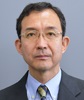
外務省 大臣官房審議官兼総合外交政策局軍縮不拡散・科学部 大使
北海道大学経済学部卒
同年 防衛庁入庁
教育訓練局教育課部員
平成4年防衛局運用課総括・運用班部員 兼 総理府国際平和協力本部事務局主査
平成5年防衛局運用課国際協力室部員
平成7年長官官房総務課部員
平成8年長官官房秘書課部員
平成9年人事教育局教育課部員
平成10年防衛局調査課調査第1班長
平成11年長官官房総務課部員
平成12年長官官房企画官 兼 長官官房総務課
平成14年在連合王国日本国大使館参事官
平成17年内閣参事官(内閣官房副長官補付(安危室))
平成19年大臣官房広報課長
平成21年大臣官房米軍再編調整官
平成23年地方協力局地方協力企画課長
平成24年東北防衛局長
平成26年外務省大臣官房審議官 兼 総合外交政策局軍縮不拡散・科学部
平成28年現職

日本原子力研究開発機構 核不拡散・核セキュリティ総合支援センター 副センター長
1983年大阪大学大学院工学研究科博士前期課程修了(原子力工学専攻)。同年日本原子力研究所入所。1983〜1993年、保障措置技術研究室において主としてウラン濃縮施設及び再処理施設における計量管理技術の研究開発に従事。1993〜1995年、米国ロスアラモス国立研究所において保障措置システム研究に従事。1995〜1997年、旧ソ連諸国における非核化支援プログラムに従事。1997年から、CTBT国際検証システムの構築に従事、この間CTBT機関準備委員会作業部会B(検証関連担当)に日本代表団として参画(第3会期〜第36会期)、2004〜2006年、日本国際問題研究所軍縮・不拡散促進センター主任研究員(出向)。「保障措置トレーニングコース」、「原子力入門講座(核不拡散)」、「軍縮・不拡 散問題講座」等の講師を務める。現在、日本原子力研究開発機構、核不拡散・核セキュリティ総合支援センター副センター長。核物質管理学会(INMM)日本支部理事、プログラム副委員長、INMM米国本部シニアメンバー。